
Hadramout Governor Pledges Stronger Human Rights Cooperation in Talks With UN Delegation
 Yemen Herald News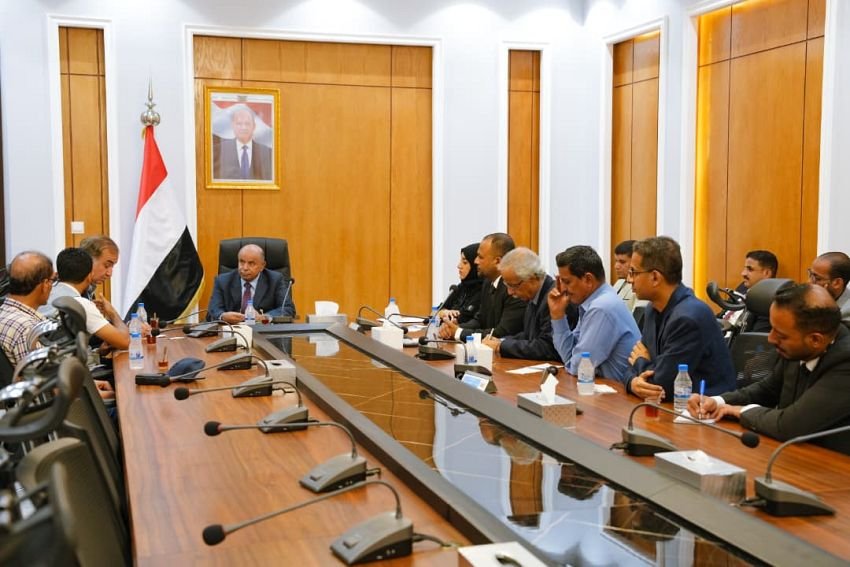
The Governor of Hadramout, Salem al-Khanbashi, has told a visiting United Nations human rights delegation that the Presidential Leadership Council and local authorities are committed to strengthening human rights and freedoms in the governorate, in talks in Mukalla that underlined both the ambitions and the constraints of governance in Yemen’s largest province.
The governor met a delegation from the Office of the UN High Commissioner for Human Rights led by Human Rights Officer Badr Farouq. According to the local account of the meeting, al-Khanbashi stressed the importance of upholding the rule of law and fostering justice, and said the leadership in Aden and the authorities in Hadramout are working together to promote basic rights that years of conflict have pushed to the margins.
The emphasis is notable in a country where human rights language has often been crowded out by the vocabulary of war. Since the conflict escalated in 2015, documentation by UN bodies and independent monitors has recorded abuses by parties on all sides, from arbitrary detention and enforced disappearance to restrictions on expression and movement, and accountability has been vanishingly rare. Engagement between provincial authorities and the UN human rights office represents one of the few channels through which international standards are pressed at the level where policing, courts and prisons actually operate.
Hadramout occupies a distinctive place in Yemen’s fractured landscape. Stretching from the Arabian Sea deep into the desert interior, it is the country’s largest governorate, rich in oil relative to the rest of the country and comparatively insulated from the front lines of the war with the Houthi movement in the north. That relative stability has made it a testing ground for what post-conflict governance might look like, and a magnet for competing political currents, from advocates of southern independence to those favouring federal arrangements within a unified state.
The governorate’s coastal capital, Mukalla, carries its own cautionary history. The city endured a year of control by Al-Qaeda in the Arabian Peninsula in 2015 and 2016 before the group was driven out, an episode that left local authorities acutely aware of how quickly security vacuums can be filled. Investment in lawful institutions, officials argue, is not an ornament of stability but its foundation.
For the United Nations, sustained access to provincial authorities offers a practical complement to its national-level diplomacy. Yemen’s peace process remains stalled, and the UN human rights office has worked to preserve monitoring and technical cooperation wherever conditions permit. Hadramout, with functioning local government and comparative security, permits more than most: training for police and prison officials, reviews of detention conditions and support for legal aid are the kinds of cooperation such visits typically explore.
The challenges, however, are structural. Courts across government-held Yemen suffer from shortages of judges, crumbling infrastructure and salaries eroded by currency collapse. Security agencies answer to a patchwork of authorities, some aligned with the internationally recognised government, others with the Southern Transitional Council or with local power brokers. In such an environment, even sincere commitments from a governor confront limits on enforcement, and rights advocates note that pledges made in meetings must ultimately be measured in prosecutions, releases and functioning oversight.
The national backdrop compounds the difficulty. More than 18 million Yemenis need humanitarian assistance and some 4.5 million remain displaced, according to UN estimates, and the primary energies of both government and donors flow toward keeping people alive. Yet the two agendas are linked: displaced families need documentation and protection from exploitation, aid operations depend on lawful local administration, and the recurrent outbreaks of disease that afflict the country strike hardest where governance is weakest.
Regional geography raises the stakes further. Hadramout’s long coastline faces shipping lanes that connect the Red Sea and the Gulf of Aden to the Indian Ocean, waters whose security has global economic significance. Stability in the governorate therefore concerns capitals far beyond Yemen, and international partners, including Gulf states and Western governments, have invested in Hadramout’s security forces and infrastructure with that wider picture in mind.
Al-Khanbashi’s message to the UN delegation fits a broader effort by Yemen’s government to present itself as a credible steward of institutions, distinct from both the Houthi authorities in the north, whose detention of UN staff has drawn international condemnation, and the militia rule that has flourished elsewhere. Demonstrating respect for rights is central to that claim, and provincial engagement with UN monitors offers a way to substantiate it.
The visit also reflects a run of international attention to Hadramout specifically. In recent days the governorate has hosted the French ambassador for discussions on development cooperation and tours of health and infrastructure projects in Mukalla, part of a pattern in which foreign partners treat the province as a place where assistance can be delivered and absorbed. Local officials have encouraged that perception, arguing that demonstrable good governance in Hadramout can anchor recovery for the wider south.
Whether the discussions in Mukalla mature into concrete programmes will depend on follow-through from both sides: sustained access for monitors, resources for courts and police, and the political will to act when violations are documented. The rule of law is rebuilt in increments, and in a country as damaged as Yemen, each functioning courtroom and each accountable security unit counts. The meeting in Mukalla was a small step, but in Yemen’s circumstances, small steps in the right direction are not to be dismissed.
About the Author




