
Marib Deputy Governor and UK Charity Discuss Expanding Food and Water Aid
 Yemen Herald News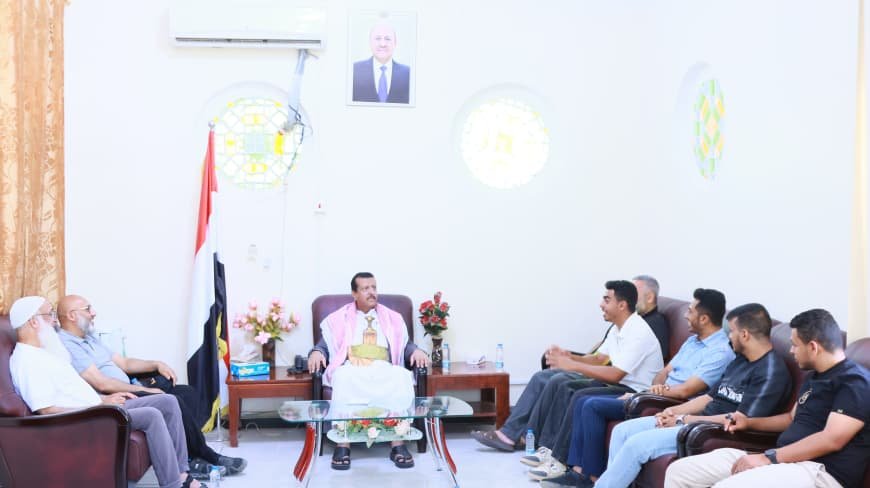
On Sunday, the Deputy Governor of Marib, Dr. Abdrabuh Miftah, held talks with a delegation from the Blackburn Organization, a British humanitarian group led by Khaled Farid, to review the charity’s work in the governorate and explore ways to expand it. The discussion centred on food and clean water, two of the most pressing needs in a province that shelters one of the largest displaced populations anywhere in Yemen. The meeting came as Marib continues to strain under the weight of families arriving from areas gripped by conflict.
Miftah thanked the organization for its sustained engagement and said broader assistance was vital to easing the pressures facing the governorate. He noted that, according to the local authority, Marib hosts more than 62 percent of Yemen’s internally displaced people, a figure officials cite to underline the province’s role as a sanctuary for those escaping violence elsewhere in the country. Independent monitors likewise place Marib among the country’s principal destinations for the displaced, with humanitarian agencies estimating that the governorate has taken in well over a million people since the war intensified.
The deputy governor assured the delegation that local authorities would help facilitate the charity’s projects from planning through to delivery. He stressed that recovery efforts should reach not only displaced families but also the host communities that shoulder much of the burden, sharing scarce water, land and services with newcomers whose numbers have swelled over years of war.
Marib’s humanitarian outlook has grown steadily more difficult, shaped by a weakening economy, a depreciating currency and a decline in international funding. Aid agencies have repeatedly warned that shortfalls in donor support force painful cuts to food rations, water trucking and health services at a time when needs are rising rather than easing. The continued displacement of families, many pushed out of Houthi-controlled areas, keeps adding to the caseload that local resources must absorb.
The wider crisis is rooted in a conflict that escalated in 2015, when a Saudi-led coalition intervened after the Houthi movement seized the capital, Sana’a. Years of fighting have turned millions of Yemenis into internally displaced people and left much of the population dependent on aid. The United Nations estimates that well over 18 million people across the country need humanitarian assistance, and relief operations have struggled to keep pace, with recurring outbreaks of preventable diseases such as cholera and measles.
Tracking by the International Organization for Migration has consistently identified Marib as one of the foremost destinations for displaced families, and humanitarian agencies estimate that roughly 4.8 million Yemenis remain displaced nationwide. In 2025 the United Nations projected that around nineteen million people, more than half the population, would require some form of assistance during the year, a caseload that far outstrips the funding available to meet it.
Marib sits at the centre of this landscape, both as a frontline governorate and as a haven. The province has been a focal point of the struggle between the Houthi movement and the internationally recognized government backed by the Saudi-led coalition. Periodic military escalation on its outskirts has repeatedly threatened camps and disrupted aid deliveries, complicating the work of organizations trying to reach the most vulnerable.
Much of Marib’s displaced population lives in crowded, informal camps on the desert fringes of the city, where access to safe drinking water is a daily concern and where sudden storms and flooding have repeatedly damaged shelters. The emphasis Miftah placed on water supply reflects those realities: without reliable sources of clean water, camps remain exposed to disease outbreaks that can spread quickly through densely packed sites. Aid workers say clean water and basic sanitation are among the most effective ways to prevent such outbreaks.
Against that backdrop, the Blackburn Organization’s interest in expanding its presence reflects a recognition that needs in Marib far outstrip current resources. Charities working in the governorate have typically concentrated on essentials such as clean water, emergency relief and support for families with no reliable income, while also seeking longer-term projects that can help communities become more self-sufficient. Pairing immediate relief with durable solutions, officials argue, offers the best chance of blunting the long-term effects of displacement.
Miftah framed the cooperation as part of a broader effort to reshape the humanitarian response in Marib, arguing that innovative approaches and a wider mix of funding sources are needed to address the roots of the crisis rather than only its symptoms. He appealed to the international community not only to acknowledge the scale of the emergency but to translate that recognition into practical, sustained support tailored to conditions on the ground.
The success of such partnerships, he suggested, will depend on how effectively local authorities, international donors and charities like the Blackburn Organization coordinate their efforts. That cooperation is intended to meet the daily demands of survival, from food and water to shelter, while also laying the groundwork for recovery and rebuilding once conditions allow.
For now, the trajectory of humanitarian work in Marib remains closely tied to the course of Yemen’s broader conflict and to the willingness of donors to maintain funding. With displacement continuing and resources stretched thin, officials in the governorate say sustained commitment from partners abroad will be decisive in determining whether Marib can keep sheltering those who have already lost so much.
About the Author




