Yemen’s Planning Minister and World Bank Vice President Discuss Expanded Development Support in Aden
 Yemen Herald News
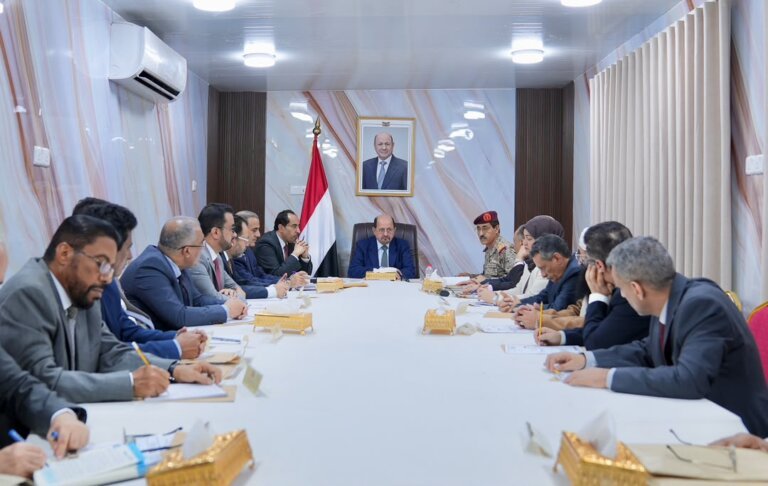
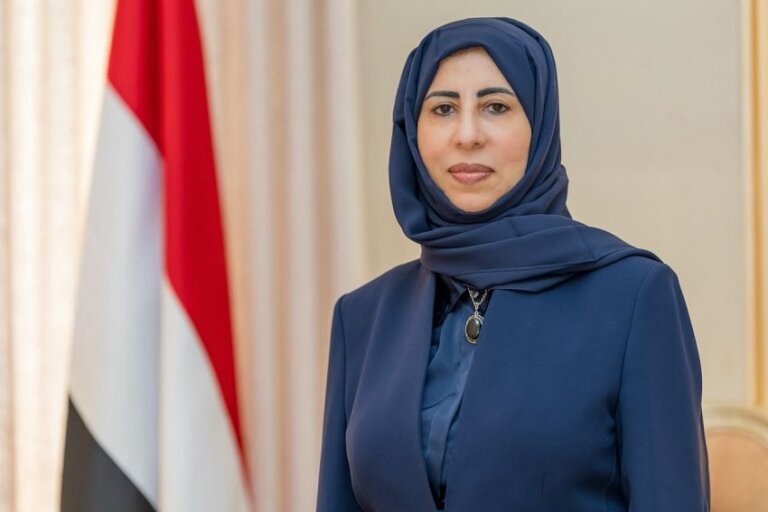
Yemen’s Minister of Planning and International Cooperation, Dr Afrah al-Zouba, chaired a meeting in Aden with a senior World Bank delegation to discuss widening the Bank’s support for the country across development, humanitarian, service and economic sectors. The session, held on a Monday in late March 2026, brought together several members of the cabinet with a delegation led by Ousmane Dione, the Bank’s Vice President for the Middle East, North Africa, Afghanistan and Pakistan.
Al-Zouba, who serves as Yemen’s Governor to the World Bank in addition to the planning portfolio, has been the government’s principal interlocutor with the institution. The Aden meeting formed part of a series of engagements during the delegation’s visit, which also covered the government’s proposed projects for the coming year and questions surrounding Yemen’s re-engagement with standard international financial reporting.
Ministers present reviewed the Bank’s existing portfolio in Yemen, which is concentrated on service delivery, economic and financial stabilisation, institutional support and capacity building. Among the initiatives discussed were public financial management work, support for core government functions, and programmes delivered through United Nations agencies and international organisations, a modality the Bank has used extensively in Yemen because it allows funds to reach basic services without passing through contested administrative structures.
The ministerial attendance indicated the breadth of what was under discussion. Alongside the planning ministry, the delegation met counterparts responsible for finance, electricity, water, health, education and civil service affairs, portfolios that between them account for most of what the state is expected to deliver and most of what has been disrupted since 2015.
The discussion returned repeatedly to the strain on public institutions. Officials described the pressure that prolonged conflict has placed on service delivery and on the state’s ability to pay for it, with damaged infrastructure, interrupted revenue and a currency that has lost much of its value against the dollar in government-held areas. Salaries in the public sector have gone unpaid or partially paid for extended periods, and the resulting loss of experienced staff compounds the difficulty of implementing any programme.
Participants emphasised the importance of aligning national priorities with the Bank’s strategic partnership framework so that support translates into durable results rather than one-off interventions. Much of the meeting concerned implementation capacity: how to build national expertise, improve institutional efficiency, and involve qualified Yemeni professionals directly in delivering development programmes rather than relying on external contractors, an approach intended to leave capability behind when individual projects close.
Al-Zouba set out the government’s commitment to a comprehensive programme of economic and financial reform aimed at restoring growth and improving service levels. That agenda has been under discussion with international partners for several years and touches areas that are politically difficult, including fuel subsidies, revenue collection and central bank operations, all of which are complicated by the division of monetary authority between Aden and Sanaa.
Dione, for his part, reiterated the World Bank’s commitment to Yemen and outlined a strategy built on three pillars: improving nutrition, expanding access to electricity, and developing the agriculture and aquaculture sectors. The choice reflects both the scale of need and the areas where measurable progress is plausible. Yemen has among the world’s highest rates of acute malnutrition among children; grid electricity reaches only a fraction of the population, with solar systems filling part of the gap; and fishing and farming remain the largest sources of employment outside the public sector, particularly along the Red Sea and Gulf of Aden coasts.
Electricity in particular functions as a constraint on everything else. Hospitals, water pumping, cold chains for vaccines and food, schools and small businesses all depend on power that is intermittent or absent across much of the country. Investment in generation and distribution, including decentralised solar, has therefore featured prominently in donor planning as a precondition for progress in health, water and livelihoods rather than as a standalone sector.
Accountability arrangements also featured. Officials raised the need for stronger oversight and monitoring of funded projects, an issue that donors have pressed consistently given the difficulty of verifying delivery in a country where access is uneven and where several administrations exercise authority over different areas. Directing support towards areas under government control while maintaining humanitarian access elsewhere remains an unresolved tension in the aid architecture.
The meeting closed with an undertaking to continue the dialogue in preparation for the Country Partnership Framework meeting scheduled for May, at which the government’s observations and proposals were to be taken into account. A Country Partnership Framework sets out the Bank’s programme for a country over a multi-year period, so the discussions in Aden functioned as preparatory work for decisions with a longer horizon than the individual projects under review.
The wider context remains difficult. Humanitarian funding for Yemen has declined in successive appeal cycles even as needs have persisted, and the government continues to face revenue shortfalls after the interruption of oil exports. Development lending cannot substitute for either, but the shift in emphasis reflected in the Bank’s three pillars, away from emergency relief and towards nutrition, energy and food production, points to an attempt to connect immediate assistance with something more durable. Whether that connection holds depends on conditions that neither the ministry nor the Bank controls.
About the Author