Maduro Asks a US Judge to Dismiss Drug Charges, Saying Sanctions Block His Defence
 Yemen Herald News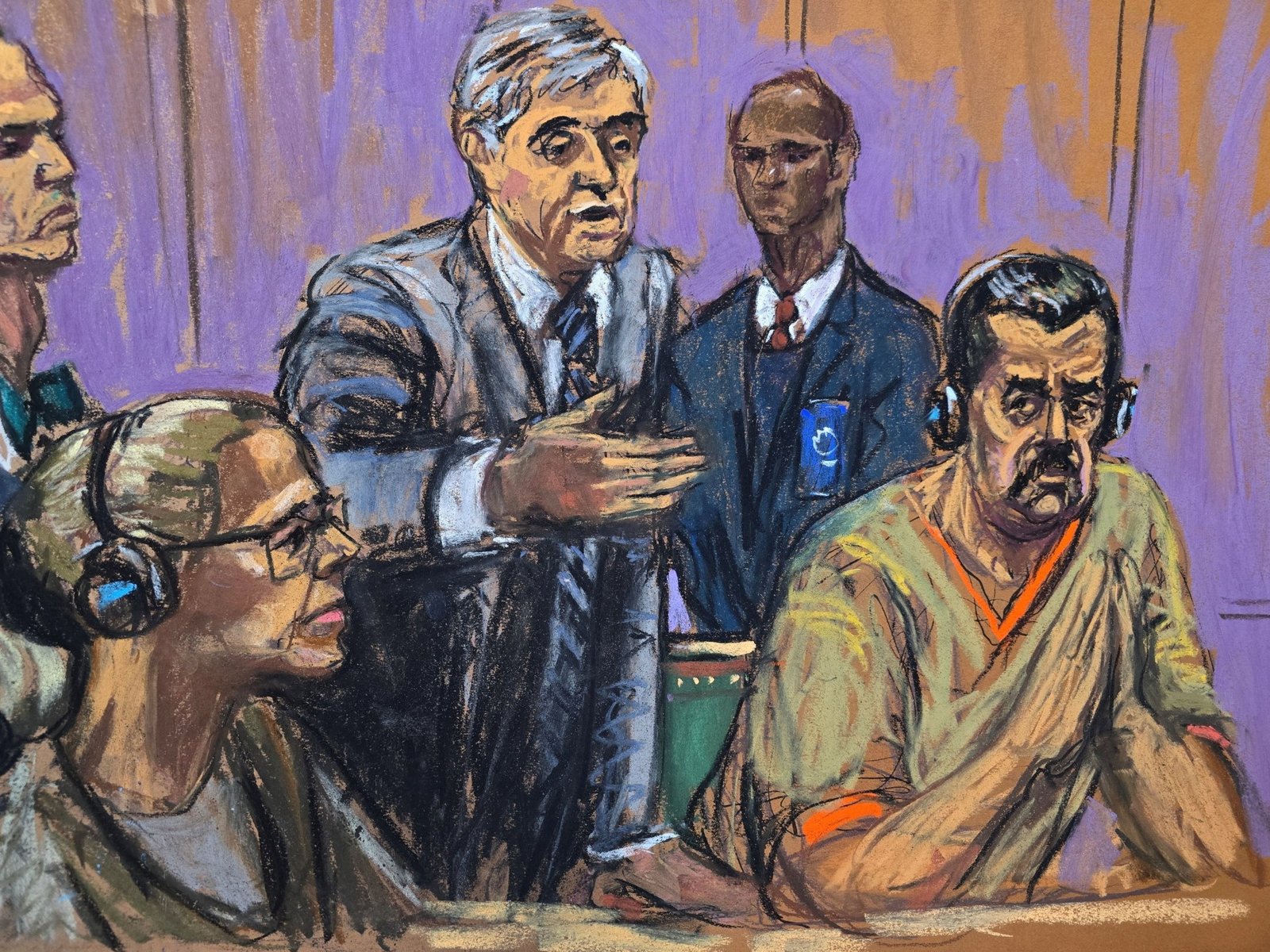
Nicolás Maduro, the former president of Venezuela, appeared in a federal courtroom in Manhattan in late March 2026 to press an unusual argument: that the drug-trafficking case against him should be dismissed not because the allegations are wrong, but because United States sanctions have made it impossible for him to mount a proper defence. He has pleaded not guilty to all counts.
The indictment carries four felony counts, including conspiracy to commit narcoterrorism and conspiracy to import cocaine into the United States. A conviction on the most serious of them could result in a life sentence. His wife, Cilia Flores, is charged as a co-defendant and has also pleaded not guilty.
The dismissal motion turned on a technical but consequential point of sanctions law. Maduro’s lawyers told the court that the Treasury Department had not issued the government of Venezuela a specific licence permitting it to draw on funds subject to US sanctions in order to pay his American legal team. Without such a licence, the defence argued, the money that would ordinarily fund a defendant’s representation in a case of this scale is frozen, and the prosecution cannot fairly proceed. The argument asked the court to treat the funding block not as an inconvenience but as a defect going to the validity of the case itself.
The judge appeared willing to engage with at least part of the reasoning. During the March proceedings he questioned what national security purpose the sanctions still served now that Maduro was no longer running Venezuela and was in American custody awaiting trial. The measures had been imposed to pressure a sitting government; the person they now constrained was a defendant in a US courtroom, and the practical effect was to limit what he could spend on lawyers.
That tension is what makes the case procedurally distinctive. Sanctions regimes are instruments of foreign policy, administered by the executive branch, and they were not designed with the mechanics of a domestic criminal trial in mind. When the target of a sanctions programme becomes a criminal defendant in the same jurisdiction that imposed it, the two systems begin to pull against one another—one seeking to cut off access to assets, the other assuming a defendant can retain counsel of his choosing and fund a meaningful defence.
The prosecution has its roots in an indictment brought years before Maduro left office, at a time when Washington had accused his administration of corruption and of facilitating cocaine shipments out of Venezuela, and had layered successive rounds of sanctions on Venezuelan officials and state enterprises. Those accusations were rejected at the time by Caracas, and Maduro’s defence has continued to characterise the prosecution as political in origin rather than evidentiary.
The sanctions architecture at issue was built up over successive US administrations and is administered by the Treasury’s Office of Foreign Assets Control, which freezes assets within American jurisdiction and issues licences carving out categories of transaction that are permitted despite the general prohibition. Venezuelan state entities, including the national oil company and the central bank, have been among the principal targets. A licence covering legal fees for a designated individual is the kind of narrow authorisation OFAC routinely considers, which is why the defence framed the absence of one as a deliberate choice rather than an administrative oversight.
In the months after the March hearing the case moved forward without being resolved. Maduro returned to court on 22 July 2026, when the judge stated plainly that he would not throw the case out. He told the courtroom, in substance, that he was not going to dismiss the case, while leaving the door open for the defence to make its arguments in the ordinary way.
The judge then set a schedule. Maduro’s first full round of motions seeking dismissal was due by 2 September 2026, with a hearing on those motions listed for 17 November. At the same hearing the court fixed a trial date of 1 June 2027, giving both sides roughly a year to litigate the preliminary questions before a jury is empanelled.
Separately from the sanctions argument, a defence lawyer indicated an intention to seek dismissal on the ground that Maduro is immune from prosecution as the former head of a sovereign state. Head-of-state immunity is a well-established principle in international law, but its application to a former leader facing criminal charges in another country’s domestic courts is contested, and US courts have generally been reluctant to extend it once an individual has left office and the executive branch has declined to recognise a claim of immunity.
Prosecutions of former heads of state in American criminal courts are rare, and the early stages of this one have been dominated by questions of procedure rather than evidence. Whether Maduro can pay his lawyers, whether he can claim immunity, and whether the court has jurisdiction at all will be argued before any jury hears about the substance of the trafficking allegations.
For now the case remains live, the charges stand, and Maduro remains in US custody. The rulings expected in late 2026 on the dismissal motions will determine how much of the indictment survives to trial, and whether the sanctions question—raised first as a practical complaint about legal fees—ends up shaping the outcome of a prosecution that Washington spent years building.
About the Author