Marib Deputy Governor and Japanese NGO IVY Explore Expanded Aid and Recovery
 Yemen Herald News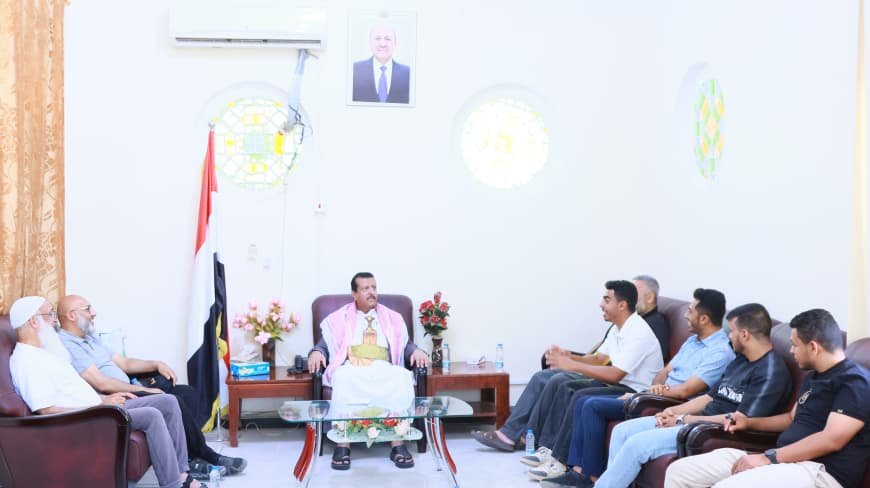
The Deputy Governor of Marib, Dr. Abdrabuh Miftah, met on Sunday with Yosuke Nagai, executive director of the Japanese non-governmental organization IVY, to discuss the group’s humanitarian and development plans in the governorate. The talks focused on programs designed to strengthen community resilience, support local peacebuilding and help Yemen recover from years of conflict. IVY has worked in Marib for several years, and both sides used the meeting to weigh how its assistance might be broadened to match the province’s deepening needs.
The discussions were attended by IVY’s Middle East program coordinator, Yegumi Ito, and its Yemen country director, Amjad al-Sharjabi. Together with Miftah, they reviewed what the organization has accomplished in Marib over the past two years and examined the effect its projects have had on residents and displaced families alike. Officials described the aim as expanding that work in a way that aligns with the region’s most urgent priorities.
IVY’s activities in Yemen have centred on local peace initiatives and sustainable development, alongside rehabilitation projects that help reintegrate people released from arbitrary detention by the Houthi movement. The organization has also supported communities hit hardest by the fighting through practical measures such as conditional cash assistance tied to health-awareness sessions in the Al-Manin and Al-Rabwa displacement camps. Related programs have sought to reintegrate young people formerly associated with armed groups, an effort officials regard as essential to longer-term stability.
Miftah commended the organization’s partnership with the local authority and expressed appreciation for Japan’s continued humanitarian and development support to Marib. He pointed in particular to the recent provision of $5.3 million channelled through the International Organization for Migration to sustain relief efforts in the governorate, funding that officials say has helped keep essential services running for vulnerable families.
Japan has been among the donors sustaining relief work in Yemen throughout the war, financing water, health and livelihood projects often delivered in partnership with United Nations agencies and international bodies. Channelling support through the International Organization for Migration allows money to reach displacement sites where needs are most acute, and officials in Marib have repeatedly urged donors to keep such contributions flowing as the emergency drags into its second decade.
The backdrop to the meeting remains stark. More than 18 million people across Yemen need humanitarian assistance, and millions have been driven from their homes by a war that escalated in 2015, when a Saudi-led coalition intervened after the Houthi movement captured the capital, Sana’a. The prolonged struggle between the internationally recognized government and the Houthis has battered the economy, weakened public institutions and left aid agencies straining to reach those in greatest need.
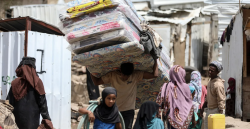
Marib has borne an outsized share of that displacement. As a government-held province bordering Houthi-controlled territory, it has become one of the country’s principal refuges for families fleeing violence, its camps swelling with new arrivals even as resources dwindle. Humanitarian monitors consistently rank the governorate among the largest hosts of displaced people in Yemen, a status that makes the work of organizations like IVY both harder and more important.
Much of that displaced population lives in informal settlements around Marib city, where families depend on trucked water, food assistance and basic health services. Aid agencies estimate that roughly 4.8 million Yemenis remain displaced nationwide, and in 2025 the United Nations projected that around nineteen million people, more than half the population, would need some form of assistance. Seasonal storms and flooding periodically damage tents and wash away belongings, deepening the hardship in these sites. Those figures help explain why local officials press international partners to widen, rather than scale back, their programs.
Miftah urged IVY to expand its support, particularly as local authorities prepare for the anticipated release of detainees under a prisoner-exchange arrangement that has since faltered. He described the situation surrounding those detainees as pressing, noting the uncertainty created for families after the Houthi movement withdrew shortly before the exchange was due to be carried out. Reintegrating released detainees, he suggested, will require both immediate assistance and sustained social support.
Beyond emergency relief, officials and aid workers see long-term recovery as tied to successful peacebuilding. IVY’s focus on community resilience emphasizes rebuilding the social bonds frayed by years of war, and its programs are designed to foster an environment in which returnees and host communities alike can begin to rebuild their lives. Such efforts, their advocates argue, are meant to lay the groundwork for stability rather than simply respond to each new emergency.
The road ahead remains difficult. Yemen’s humanitarian situation is closely bound to a volatile political and security landscape, and the ability of internal and external actors to sustain dialogue will shape whether any lasting resolution is possible. Aid organizations have warned that funding shortfalls threaten even the most basic programs, making partnerships between local authorities and groups such as IVY increasingly valuable.
For Marib, the hope expressed at the meeting is that continued cooperation, both local and international, can help communities not only survive the immediate crisis but eventually move beyond it. Officials say the focus in the months ahead will likely remain on strengthening local capacity to manage integration and recovery while pressing donors to maintain the humanitarian support on which so many families still depend.
About the Author