Yemen Warns Iran’s Sana’a Air Bridge Could Escalate Weapons Supply to Houthis
 Yemen Herald News
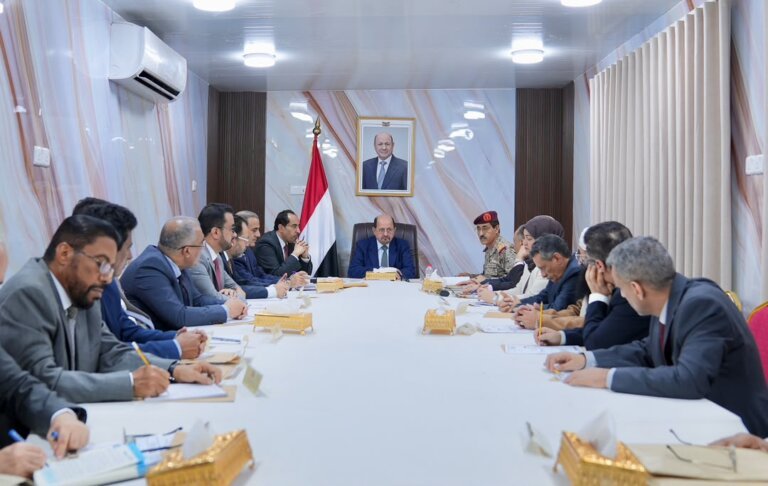
Yemen’s internationally recognised government has issued a stark warning over Iran’s push to open a direct air link with the Houthi movement, describing the move as a dangerous escalation rather than a routine act of smuggling. Information Minister Muammar al-Eryani said that an air corridor between Iran and Houthi-held territory would transform the way weapons, technology and personnel reach the group, allowing Tehran to bypass the tightened maritime routes that have long been the backbone of its support network. According to the minister, such a bridge would represent a strategic shift with consequences reaching well beyond Yemen’s borders.
The warning followed a rare and closely watched development. In early July 2026, a Mahan Air flight travelled between Sana’a and Tehran, the first commercial air connection between the two capitals in roughly a decade. A Houthi delegation used the route to travel to Iran, and reports from the ground described equipment being unloaded from the aircraft after its arrival and specialists reportedly entering the country. For the Yemeni government, the flight was not an isolated event but a signal of Tehran’s intent to normalise an aerial supply channel that had been dormant since the conflict’s early years.
Al-Eryani argued that an air route offers Iran advantages that sea shipments cannot match. Where maritime smuggling can take days or weeks and is vulnerable to interdiction, air deliveries could shorten transfer times dramatically and lower the risk of interception. The government contends that this speed matters most for sensitive cargo, including advanced components, precision technology and specialised expertise that are difficult to move discreetly by sea. In its view, a reliable air corridor would let Tehran resupply the Houthis more regularly and with greater confidentiality than the closely monitored waters off Yemen’s coast now allow.
Of particular concern to the government is the possibility that flights could ferry not only hardware but people. Al-Eryani warned that the route might be used to move Iranian military and intelligence operatives, including specialists in advanced weaponry and electronic warfare, into Houthi-controlled areas. He pointed to what he described as a lack of robust oversight at Sana’a International Airport, cautioning that the facility could be turned into a logistical hub serving both the Houthis and Iran’s wider regional ambitions. These are the government’s characterisations; the Houthis present the resumed flights as a legitimate restoration of civilian air travel.
Tensions over the airport turned physical almost immediately. On 13 July 2026, forces aligned with the anti-Houthi Defence Ministry said they had struck the runway of the Houthi-controlled Sana’a International Airport to prevent an Iranian aircraft from landing, an action that underscored how central the airport has become to the wider contest over supply lines. The strike illustrated the lengths to which the government is prepared to go to keep the air corridor from becoming permanent, and the risk that the dispute could draw the airport itself deeper into the fighting.
The controversy sits within a war that has ground on since 2015, when the Houthis’ advance triggered intervention by a Saudi-led coalition backing the internationally recognised government. The conflict has hardened into a contest with strong proxy dimensions, with Iran and Saudi Arabia backing opposing sides and a range of regional actors shaping its course. Against that backdrop, any measure that strengthens the Houthis’ ability to receive external support is read in Aden and Riyadh as a direct challenge to the balance of power on the ground.
The implications extend to some of the world’s most important shipping lanes. A better-supplied Houthi force could feel emboldened to expand operations that have already disrupted traffic through the Red Sea and the Bab al-Mandab Strait, a chokepoint for global trade. Officials worry that unchecked resupply of a non-state actor could raise the risk of confrontation with Saudi Arabia and complicate the security of maritime routes that carry a significant share of international commerce, turning a localised Yemeni dispute into a broader regional and economic concern.
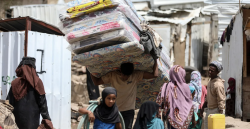
The humanitarian stakes are equally severe. United Nations agencies estimate that around 22.3 million people in Yemen, more than two-thirds of the population, need humanitarian assistance in 2026, including some 5.2 million who are internally displaced. Roughly 18.3 million people are considered acutely food insecure, and aid organisations continue to warn of recurring outbreaks of disease across a health system weakened by years of war; by late 2025 authorities had recorded more than 93,000 suspected cholera cases nationwide. Layering an expanded military supply chain onto a country in this condition, the government argues, threatens to prolong the fighting and deepen civilian suffering.
For now, the central questions remain unanswered. It is unclear how consistently Iran intends to use the air route, how the government and coalition forces will respond to further flights, and whether repeated strikes on the airport could themselves worsen conditions for the civilians who depend on it. What is clear is that the focus of the supply contest is shifting from the sea to the sky. If the pattern set in July 2026 continues, the air bridge to Sana’a could mark a turning point in a conflict that has already reshaped the security landscape of the southern Arabian Peninsula and the vital waters beyond it.
About the Author