Sisi says Egyptian forces would defend Saudi Arabia but not attack Yemen
 Yemen Herald News
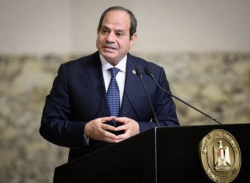
CAIRO, Egypt — Egypt’s president said any Egyptian military deployment to Saudi Arabia would be limited to defending Saudi territory and would not include an attack on Yemen.
Abdel Fattah al-Sisi made the remarks on Wednesday, according to a statement from the Egyptian presidency.
Egyptian military support would be “limited to defending the kingdom’s territory and borders,” the presidency said.
It said the effort would not extend beyond Egyptian territory or that of an Arab state whose security and stability Cairo was seeking to protect.
Sisi said Egypt would defend the territory of any other Arab country if asked.
The statement followed a request he put to parliament five days earlier.
On Oct. 17 he asked lawmakers to authorise sending troops to help Saudi Arabia defend itself against the Houthis.
Parliament postponed that vote on Monday until Oct. 26.
The threshold is high. Article 152 of Egypt’s constitution requires a two-thirds majority in the House of Representatives, or at least 398 of its 596 members, to send troops on a combat mission abroad.
Several parties have said they will not supply those votes.
The Egyptian Social Democratic Party, which holds 11 seats, said it would abstain. It said it wanted to know the mission’s objectives, its duration, its cost, and how Egyptian troops would be protected.
The Civil Democratic Movement rejected any Egyptian role in the regional war.
Mohamed Abdel-Alim Dawoud, a Wafd Party member of parliament, wrote on Facebook that he would abstain, although his party supports a deployment.
Wafd, Adl and the Republican People’s Party back the request.
Opposition parties hold 53 of the chamber’s 568 elected seats. Independents hold 105.
Mostafa Bakry, a lawmaker, wrote on X that the delay was tied to Egyptian efforts to broker a political settlement in Yemen.
Foreign Minister Badr Abdelatty discussed an initiative with his Iranian counterpart, Abbas Araghchi, on Saturday.
Effat El-Sadat, head of the Sadat Democratic Party and a senator, said standing with Saudi Arabia was compatible with diplomacy. He said mediation needed clear guarantees against renewed fighting.
Mohamed Hegazy, a former assistant foreign minister, said Egypt’s position should not be read as a move toward war.
Abdelatty and the intelligence chief, Hassan Rashad, met Saudi Crown Prince Mohammed bin Salman in Riyadh, the Saudi state news agency SPA reported.
Abdelatty delivered a written message from Sisi to King Salman, SPA said. The two sides discussed bilateral ties and regional developments.
Egypt’s foreign ministry said the letter affirmed “full solidarity with and support for Saudi Arabia.”
An Egyptian was among those killed in the attack that preceded the request.
A missile strike on King Khalid International Airport in Riyadh on Oct. 10 killed 12 people and wounded 309, according to Saudi Arabia’s General Authority of Civil Aviation.
The dead included four Saudi nationals, two Bangladeshis and one citizen each of Egypt, the United States, Jordan, Syria, Palestine and Sudan, the authority said.
US Secretary of State Marco Rubio confirmed that an American was killed. He said the attacks showed a disregard for civilian life and had to stop.
The Saudi-led coalition described the airport strike as a war crime. UN Secretary-General António Guterres condemned it, and Pakistan’s prime minister, Shehbaz Sharif, called it heinous.
The Houthis claimed another attack on the Riyadh airport the following day, and the civil aviation authority reported injuries.
The Houthis have since attacked airports at Jizan, Najran, Abha and Dammam, and claimed missile and drone strikes on the Aramco refinery at Rabigh. Saudi authorities had not confirmed the refinery strike.
Yahya Saree, the Houthi military spokesman, told Saudi Arabia to take the group’s warnings seriously.
Turki al-Maliki, the coalition spokesman, said air defences intercepted a ballistic missile aimed at al-Kharj province and a drone over the Eastern Province.
The Houthis imposed a maritime embargo on Saudi Arabia in July.
The UN-brokered truce that had largely held since 2022 has collapsed.
Saudi-backed government forces launched an offensive they call Dawn of Yemen on Oct. 4 to retake Houthi-held areas, including Mocha and Mayyun island.
Government forces say they retook Mocha and Dhubab district. The Houthis dispute that.
Colonel Majed Abdullah al-Nazili, a government forces spokesman, said on Oct. 10 that at least 1,150 Houthi fighters had been killed since the counteroffensive began. Al Jazeera said it could not verify the figure.
Türkiye, Pakistan and Saudi Arabia agreed on Oct. 5 to activate deterrence measures under a mutual defence pact.
A Houthi missile attack on a government training camp in Shabwa province on Monday killed 73 people and wounded more than 200, The Associated Press reported.
The Houthis tightened their siege of Taiz after capturing territory south of the city earlier in October, including al-Turbah. Fighting has also reached Marib and al-Jawf.
The Houthis control Sanaa and much of northern Yemen. The Saudi-led coalition backs the internationally recognised government.
Egypt joined the coalition that intervened in Yemen in 2015 and played a limited combat role.
Saudi Arabia and other Gulf states, including the United Arab Emirates, provided Egypt with billions of dollars in aid, central bank deposits and investments after the military overthrow of President Mohamed Mursi in 2013.
Sisi became president a year later.
About the Author