Yemen’s envoy to Türkiye raises shipping safety in Ankara talks
 Yemen Herald News
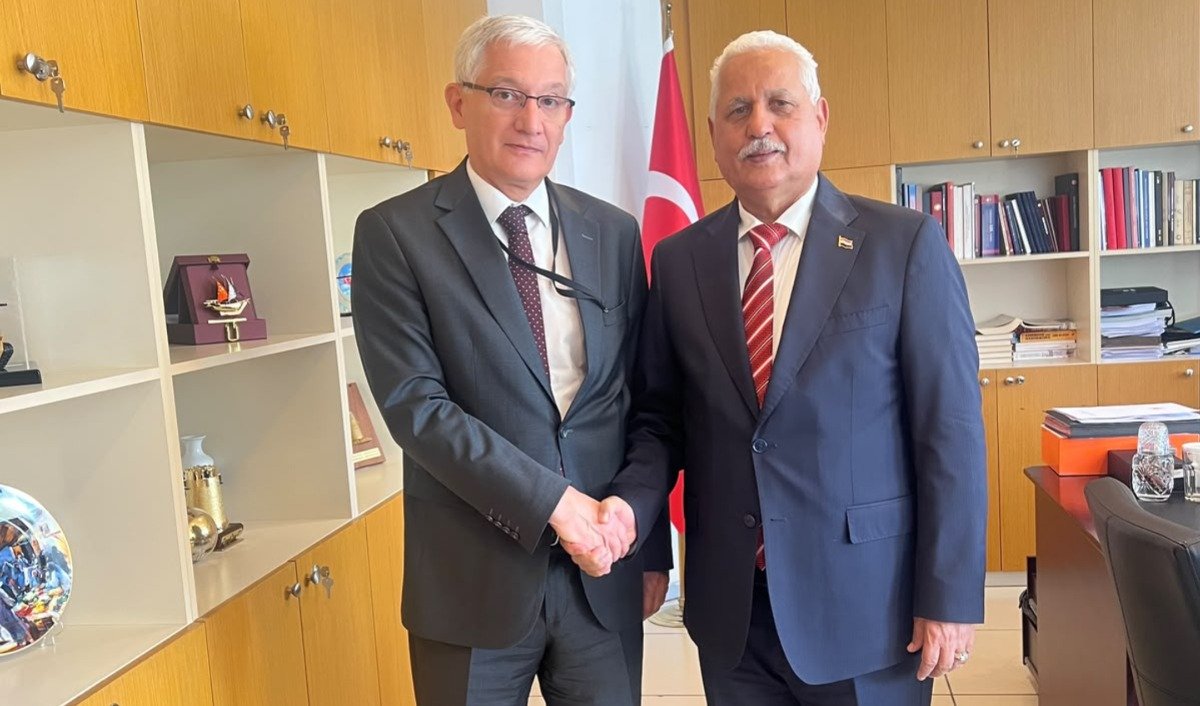
ANKARA, Türkiye — Yemen’s ambassador to Türkiye told a Turkish foreign ministry official that Houthi attacks threaten international shipping, the state news agency Saba reported.
Ambassador Mohammed Tareq held the talks on Thursday with the director general of the Middle East department at Türkiye’s foreign ministry.
Saba named the official as Ahmed Demirer. Yemen Herald could not confirm that spelling against Turkish government records.
The two discussed bilateral relations, ways to strengthen cooperation and the latest developments in Yemen, according to the agency.
Tareq briefed the Turkish official on political and security developments in Yemen.
He said Houthi practices undermine peace efforts and threaten regional and international security, Saba reported. He said they also endanger the safety of international maritime navigation.
The group rejects that characterisation.
Tareq praised what he called the strong fraternal relations between the two countries.
He thanked Türkiye for its support for Yemen’s security, stability and sovereignty, and for its commitment to cooperation across various fields.
Demirer reaffirmed Türkiye’s support for Yemen and its people in the current circumstances, the agency said. He restated Ankara’s commitment to Yemen’s security, stability and sovereignty.
Saba published no direct quotes from either man, and reported no agreements.
The account of the meeting rests on the Yemeni state news agency, and no independent confirmation of it has been published.
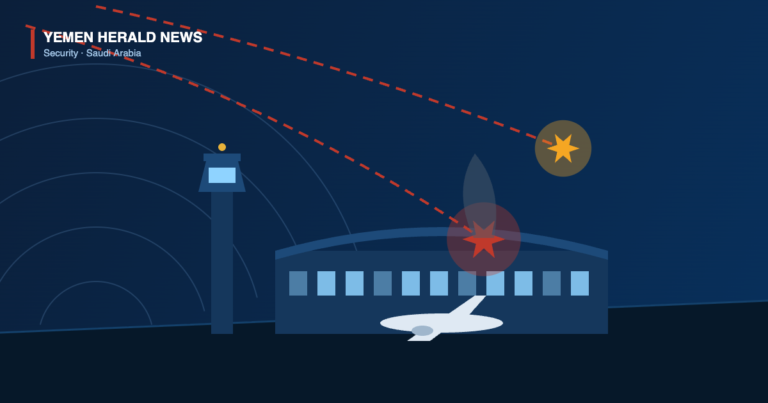
Missiles struck airports in Aden and Mukalla on Wednesday, the day before the meeting, according to Yemen’s military.
The exchange follows a similar one last month. Yemen’s foreign minister, Afrah al-Zouba, met Türkiye’s ambassador to Riyadh, Emrullah Isler, on September 30.
Al-Zouba said then that Yemen wanted to expand cooperation to rebuild state institutions and improve essential public services.
She also sought closer political and diplomatic coordination between the two governments.
Al-Zouba linked Houthi attacks to threats to trade and shipping in the Red Sea and the Bab al-Mandab Strait. She said indiscriminate missile launches endanger civil aviation.
Isler reiterated Türkiye’s support for the Yemeni government and for the country’s security, unity, sovereignty and territorial integrity.
Al-Zouba praised Ankara’s backing for the Presidential Leadership Council.
Türkiye welcomed an agreement between Yemeni parties on the release of detainees in May. The deal followed talks in Amman.
“We welcome the agreement on the release of detainees, following talks held in Amman between Yemeni parties,” the Turkish foreign ministry said in a statement on May 15.
The ministry thanked the parties involved and said it hoped the agreement would advance a comprehensive political settlement.
It said Türkiye would continue to support efforts aimed at preserving Yemen’s territorial integrity and national unity.
Turkish development work in Yemen runs through the Turkish Cooperation and Coordination Agency, known as TIKA. The agency opened a coordination office in Sanaa in 2012.
TIKA reported 93 projects and humanitarian activities in Yemen over the six years to December 2018.
Those covered health, education, agriculture and infrastructure.
The agency established four dialysis centres in 2013, in Sanaa, Aden, Taiz and Hodeidah.
It set up field hospitals in Aden and Taiz, and supplied anti-cancer drugs to 84 patients in Taiz.
TIKA distributed food to 3,000 families in Taiz, Lahj, Abyan and Aden. It gave school bags and stationery to 3,000 students in 2018.
The agency ran vocational courses for women in computing, needlecraft and accounting.
It renovated a dormitory for 250 students and equipped two others.
A cleaning operation in Aden ran for about a month and a half, using 80 personnel, five trucks and two diggers.
Yemeni public servants received administrative training through the agency.
Türkiye submitted a joint defence agreement with Saudi Arabia and Pakistan to its parliament for ratification on October 20.
The Mecca agreement was signed on August 7 and runs to 16 articles, according to the document sent to parliament.
Under its first article, the signatories use “all necessary means” to remove threats to one another’s territorial integrity.
A party under attack receives assistance, and each state decides the scope of its support after assessing what is needed.
Other articles cover defence industry cooperation, intelligence sharing, logistics, joint training and counter-terrorism. The pact lasts 10 years.
The three countries agreed earlier in October to activate deterrence measures and deploy forces to Saudi Arabia to counter Houthi attacks.
President Recep Tayyip Erdogan said on Monday that Türkiye was “surrounded by a ring of fire”. He was referring to Houthi attacks on Riyadh airport.
Burhanettin Duran, the Turkish presidency’s communications director, said the partnership aimed to strengthen collective deterrence and improve joint capabilities in the defence sector.
Ratification would not by itself permit deploying Turkish troops, which would require separate legislation.
The Houthis have attacked oil facilities and Riyadh’s main airport with missiles and drones. The Saudi-led coalition supporting Yemen’s government has launched air strikes on Houthi positions.
The Turkish embassy in Sanaa closed in 2015. Yemen’s embassy in Ankara has continued to operate.
Türkiye initially backed the internationally recognised government against the Houthis without carrying out a military intervention.
Modern relations date from 1990, when North and South Yemen united. Türkiye took a neutral stance in the 1994 war and tried to broker peace.
The Ottomans held Yemen until the end of the First World War.
About the Author