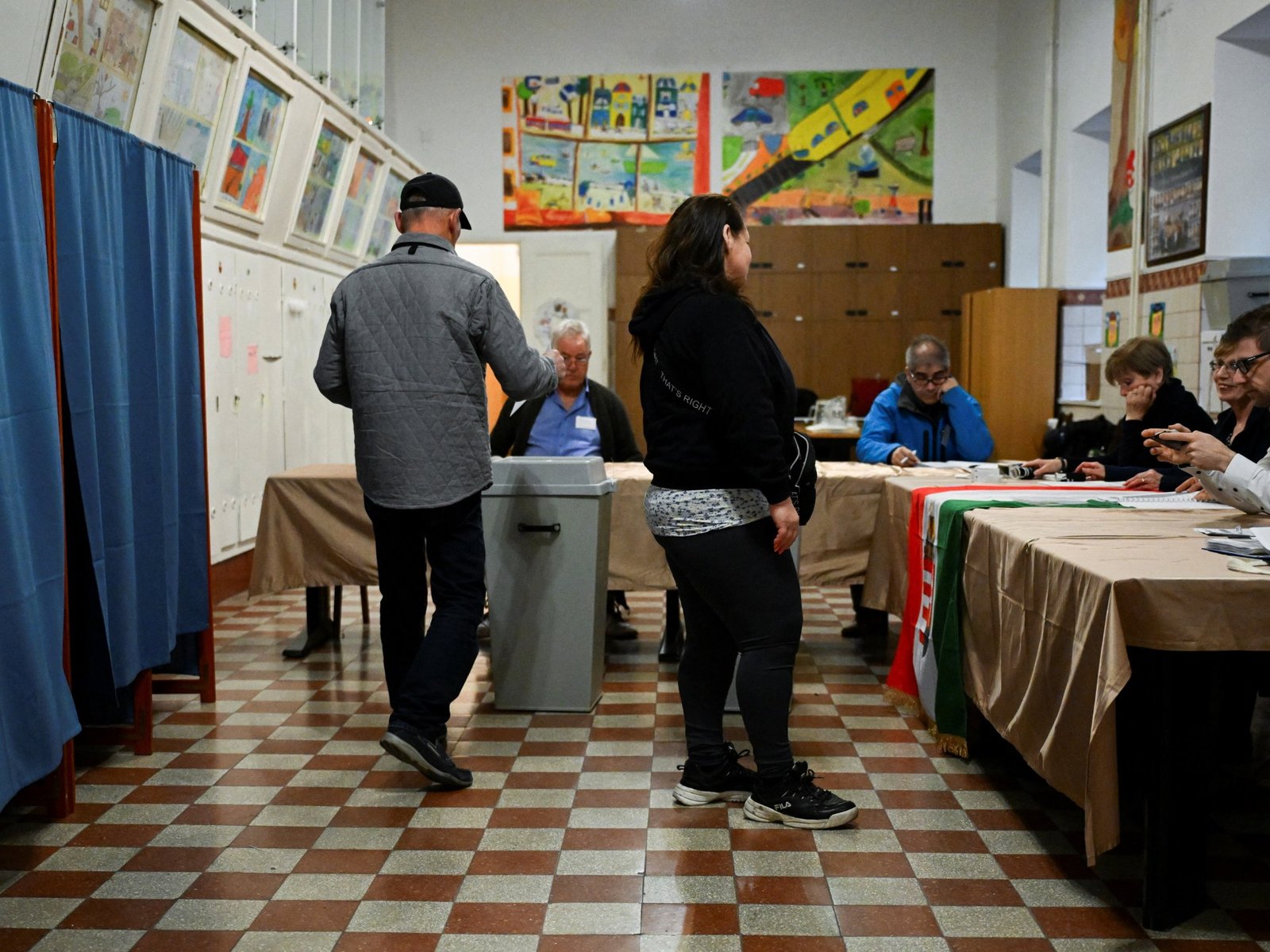
The parliamentary elections in Hungary represent not just a domestic political contest but a pivotal moment that could reshape the geopolitical landscape of Europe. With Prime Minister Viktor Orban facing unprecedented challenges, the outcome may have far-reaching implications for the European Union and its relationship with Eastern Europe.
For over 16 years, Viktor Orban has dominated Hungarian politics, steering the country through a series of controversial reforms that have often put him at odds with the European Union. His government has been characterized by a strong nationalist rhetoric, a Eurosceptic stance, and a consolidation of power that critics argue undermines democratic institutions. As Hungary grapples with economic stagnation and rising living costs, the electorate’s patience is wearing thin. The emergence of the Tisza party, led by Peter Magyar, signals a significant shift in the political landscape, as it capitalizes on public discontent and presents itself as a viable alternative to Orban’s Fidesz party.
The current election cycle has seen Orban’s Fidesz party trailing the Tisza party by a margin of 7-9 percentage points, a stark contrast to previous elections where Fidesz enjoyed a comfortable lead. This shift in voter sentiment is underscored by a growing disillusionment with Orban’s handling of the economy, which has been marked by stagnation and increasing wealth inequality. The election campaign has been intense, with Orban framing the vote as a critical choice between “war and peace,” attempting to link Magyar’s leadership to potential involvement in the Ukraine conflict, a claim that Magyar vehemently denies. This tactic reflects Orban’s reliance on fear-based messaging to galvanize his base, yet it may also alienate undecided voters who are more concerned with domestic issues.
The implications of these elections extend beyond Hungary’s borders. Should Orban lose, it could embolden opposition movements across Eastern Europe, challenging the authoritarian tendencies that have taken root in several countries. Conversely, a victory for Orban could solidify his grip on power and further entrench Hungary’s isolation within the EU, particularly as tensions rise over issues such as migration and rule of law. Economically, the outcome will influence Hungary’s fiscal policies and its relationship with EU funding, which has been a contentious issue amid accusations of corruption and mismanagement. The electorate’s decision will thus not only determine Hungary’s political future but also signal to the EU how it should navigate its relationship with member states that diverge from democratic norms.
As the election approaches, the strategic stakes are high. Orban’s ability to maintain power hinges on his capacity to mobilize his base through nationalistic appeals while addressing the pressing economic concerns of the populace. The Tisza party’s rise represents a potential realignment in Hungarian politics, one that could disrupt the status quo and challenge Orban’s narrative. The risks are palpable; a loss for Orban could lead to a power vacuum that might be exploited by more radical elements within the political spectrum. Alternatively, a victory could embolden Orban to pursue even more aggressive policies, both domestically and in his dealings with the EU, potentially leading to increased tensions and isolation.
Looking ahead, several scenarios could unfold depending on the election results. If Orban retains power, we can expect a continuation of his current policies, with a focus on consolidating control and resisting EU pressures. This may lead to further economic challenges as Hungary navigates its relationship with the bloc. On the other hand, a Tisza victory could usher in a new era of governance, characterized by a more collaborative approach with the EU and a focus on addressing economic grievances. Such a shift could inspire similar movements in neighboring countries, potentially altering the political landscape of Eastern Europe. The immediate aftermath of the election will be critical in determining Hungary’s trajectory and its role within the broader European context.
The Hungarian elections are not merely a referendum on Viktor Orban’s leadership; they are a litmus test for the resilience of democracy in Eastern Europe. As voters head to the polls, the stakes could not be higher. The outcome will resonate far beyond Hungary’s borders, influencing the EU’s future and the geopolitical dynamics of the region. Regardless of the result, the election marks a significant moment in Hungary’s history, one that could redefine its path for years to come.
About the Author