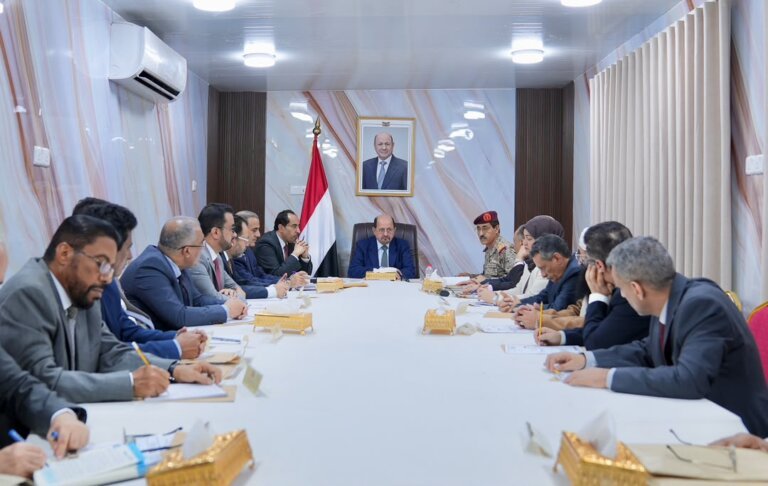
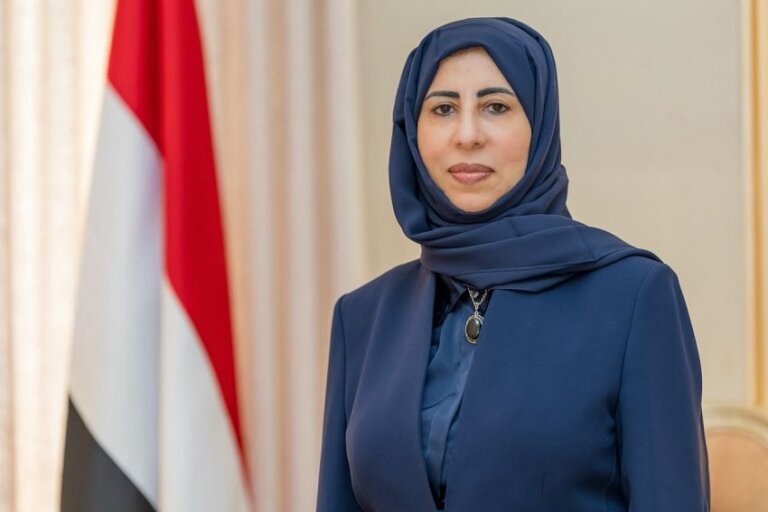
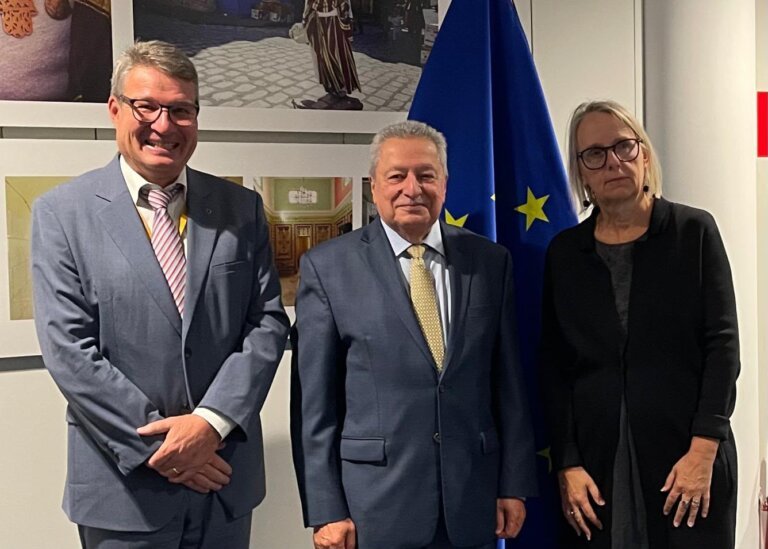
The Spanish Secretary of State for Foreign Affairs meets with the Prime Minister.
 Yemen Herald News
The protracted civil war in Yemen has been ongoing since 2015, characterized by a complex struggle for power involving multiple factions, including the Iran-aligned Houthi movement and the internationally recognized government led by the Presidential Leadership Council based in Aden. The war has triggered one of the world’s worst humanitarian crises, with over 18 million people in dire need of assistance and more than 4.5 million people displaced from their homes. The conflict has also exacerbated public health issues, leading to recurring outbreaks of diseases like cholera and measles.
The geographical setting of Yemen adds another layer of complexity to the conflict. The Red Sea and the strategic Bab al-Mandab Strait are critical maritime routes vital for global trade and energy supplies. As such, they continue to be focal points in regional geopolitics, involving not just state actors but also proxy groups influenced by powers like Iran and Saudi Arabia. The Houthis, in particular, have been accused of receiving support from Tehran, complicating the regional power struggle.
Yemen’s civil war has drawn in a Saudi-led coalition that includes the United Arab Emirates, which intervened to restore the government of President Abdrabbuh Mansur Hadi after he was ousted by Houthi forces. Over the years, various periods of negotiations aimed at establishing peace have struggled against lasting hostilities, particularly from the Houthis, which remains steadfast in its goals and has yet to engage constructively towards resolution.
As the situation in Yemen continues to deteriorate, efforts for national reconciliation and the stabilization of the governance structures represent critical goals. The international community, including the United Nations and several countries, has been working to mediate conflicts and establish frameworks for peace, but the effectiveness of these initiatives is often overshadowed by the ongoing violence and political stalemate.
The recent meeting between Dr. Shaya Zindani, Yemen’s Prime Minister and Foreign Minister, and Diego Martínez Bolo, the Secretary of State for Foreign and Global Affairs of Spain, illustrates ongoing diplomatic efforts aimed at improving bilateral relations. During this engagement, the two officials examined numerous avenues for collaboration that could benefit both nations, reflecting a shared commitment to addressing mutual interests.
One of the focal points of their discussions was the ongoing crisis in Yemen and the regional dynamics that affect it. Dr. Zindani highlighted the significant challenges posed by the Houthi movement, which has remained unyielding in its resistance against political discussions and resolutions. The desire for stability is particularly pressing, as it is essential to the humanitarian relief efforts and the protection of Yemen’s infrastructure and resources.
The security of maritime navigation in key transit routes like the Red Sea and the Bab al-Mandab Strait was another topic of concern. Both officials recognized these waterways’ critical importance for international trade and shipping, debate being intensified by increased hostilities and tensions in the region arising from Houthi threats and naval blockades. Such discussions emphasize Yemen’s critical role as a transit point and the responsibilities it carries in ensuring that these maritime routes remain secure for global shipping interests.
In addition to security and humanitarian issues, Dr. Zindani conveyed Yemen’s aspiration for enhanced economic cooperation with Spain. This includes tapping into Spanish expertise, particularly in areas such as fisheries, which are vital for Yemen’s economic recovery and long-term sustainability. As Yemen grapples with widespread poverty and financial instability, building partnerships that strengthen investment possibilities will be crucial to the country’s recovery.
The principal stakeholders in Yemen include the Yemeni government, the Houthi movement, the Saudi-led coalition, and various international actors. The Yemeni government, represented by the Presidential Leadership Council, seeks international legitimacy and support to regain control over territories held by the Houthis. This entity faces immense challenges, both from armed factions and a rapidly deteriorating humanitarian situation that undermines public confidence and authority.
The Houthi movement remains a significant force in the ongoing conflict, asserting control over much of northern Yemen, including the capital, Sana’a. Their resistance to international mediation efforts complicates peace negotiations, as they often reject proposals aimed at de-escalation or power-sharing. Given their ties to Iran, their actions and strategies are often influenced by broader regional power plays, adding to the complexity of the peace process.
The involvement of the Saudi-led coalition introduces another layer of dynamics to the conflict. This coalition, comprising several Gulf states, seeks to restore the Yemeni government and counter Iranian influence in the region. However, the coalition’s military actions have often exacerbated the humanitarian crisis, raising concerns about civilian casualties and the blockade of essential supplies. This inconsistency in approach has led to calls for an improved strategy that prioritizes humanitarian needs while ensuring stability.
International actors, including the United Nations and various non-governmental organizations, play a pivotal role in coordinating humanitarian aid and mediating between conflicting parties. Their efforts are critical, but they encounter significant challenges given the complex landscape of Yemen’s internal politics, regional rivalries, and persistent hostilities. The actions of these organizations shape the lived realities of millions of Yemenis affected by the war and ongoing human rights violations.
The ongoing conflict in Yemen has far-reaching consequences not just for its citizens but also for the broader Middle Eastern region. As a strategically located country at the intersection of the Red Sea and the Gulf of Aden, Yemen serves as a critical artery for international shipping and trade. The instability stemming from the civil war has drawn the attention of global powers due to potential threats to maritime security and energy transport routes.
The activities of the Houthis movement, which have included missile strikes and drone attacks in the region, heighten tensions between Iran and Saudi Arabia. The Houthis’ capability to influence maritime routes presents a challenge for international shipping, potentially leading to an escalation of military responses from regional powers. These developments could trigger a wider conflict that encompasses various actors, further destabilizing an already volatile region.
Additionally, the humanitarian crisis in Yemen serves as a stark reminder of the urgent need for a peaceful resolution. Neighboring countries, especially those in the Gulf Cooperation Council, face the repercussions of an ongoing humanitarian disaster that leads to mass displacement and migration. The coping mechanisms of neighboring countries are strained as they deal with both refugees and security challenges posed by the instability in Yemen.
The broader geopolitical dynamics also mean that external powers like the United States and European nations are compelled to engage with the conflict. Their interests often lie in countering Iranian influence and ensuring the security of shipping lanes, leading to military and diplomatic interventions that can influence the course of the conflict. These conditions complicate peace efforts and often perpetuate a cycle of violence in the region.
The meeting between Yemen’s Prime Minister and the Spanish Secretary of State indicates a recognition of the need for international partnerships to confront Yemen’s ongoing challenges. Spain’s expressed commitment to support Yemen underscores a broader effort by various nations to bolster diplomatic channels, particularly as Yemen grapples with complex national and regional issues. However, the success of such initiatives will heavily depend on the willingness of the Houthis to engage in dialogue and the capacity of the Yemeni government to present a unified front.
While the discussions on economic cooperation, particularly in the fisheries sector, reflect potential areas for collaboration, the reality on the ground poses significant hurdles. The lack of security and the persistent threat of violence from the Houthis undermine efforts to rebuild essential infrastructure and stimulate local economies. As the humanitarian crisis worsens, there is a pressing need for sustainable aid strategies that address immediate needs while laying the groundwork for long-term recovery.
Another critical factor is the role of international organizations and nations in mediating peace talks. The varying interests of external actors often lead to competing agendas, which can stall the peace process. The continued provision of military support by external powers to their respective aligned factions further complicates the possibility of achieving a durable resolution to the conflict. A cohesive international approach that prioritizes peaceful negotiations over military solutions is essential for establishing a stable future for Yemen.
Ultimately, the intersection of local, national, and regional dynamics continues to shape the trajectory of the conflict. Efforts to bridge the divide between rival factions should focus not just on immediate political solutions but also on addressing the underlying socio-economic grievances that fuel discontent. This multifaceted approach is critical to ensuring that Yemen can navigate its path toward peace and stability.
Looking ahead, the situation in Yemen remains fluid, and the prospects for peace will require concerted efforts from all stakeholders involved. The upcoming weeks and months could prove pivotal as international partners, including Spain and other nations, press for a renewed commitment to dialogue and negotiation. The continued support from countries like Spain could provide the Yemeni government with the necessary diplomatic backing, enabling it to better advocate for its interests on the global stage.
Moreover, the Houthi movement’s response to these diplomatic overtures will be crucial. If they remain steadfast in their rejection of dialogue, the prospects for a peaceful resolution will dim, leading to heightened tensions and continued hostilities. Conversely, any willingness among the Houthis to engage in meaningful negotiations could pave the way for a reduction in violence and a potential ceasefire, which many hope could lead to further discussions on a lasting peace framework.
On the humanitarian front, international agencies must prioritize immediate relief efforts while simultaneously advocating for long-term development initiatives that focus on recovery and rehabilitation. The urgent needs of the population—particularly in healthcare, sanitation, and food security—must be addressed to mitigate the worsening crisis and prevent further deterioration of living conditions for millions of Yemenis.
Lastly, as regional dynamics continue to evolve, the international community must remain vigilant in monitoring developments in Yemen. Engaging in cooperative dialogue between opposing factions, promoting confidence-building measures, and ensuring the security of key maritime routes will be necessary steps to foster a sustainable resolution that benefits both Yemen and the region as a whole. The path toward peace may be challenging, but the combined efforts of both domestic and international actors can help chart a course toward stability and recovery for Yemen.
About the Author