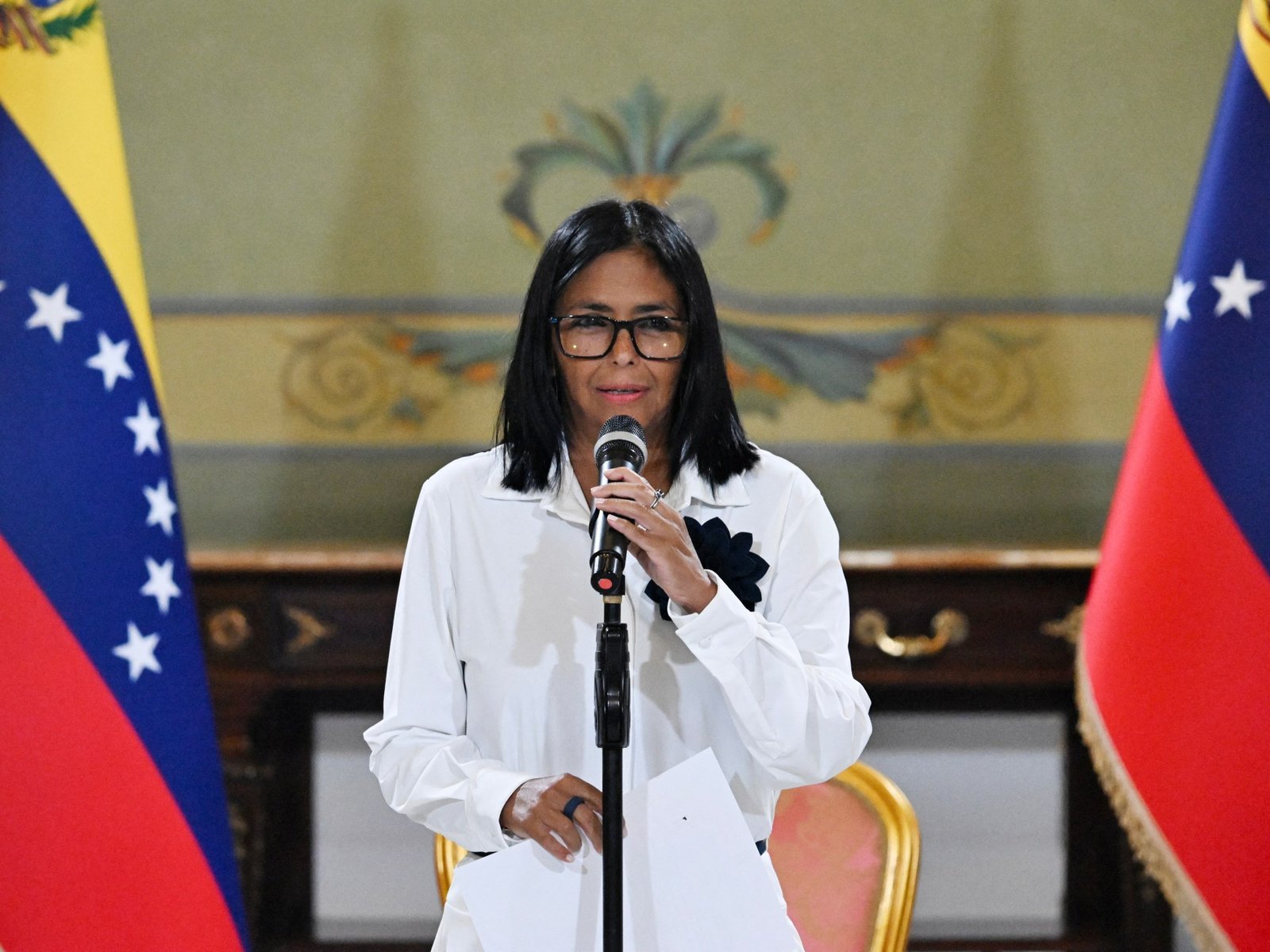
The recent call by Venezuelan interim President Delcy Rodriguez for a complete lifting of U.S. sanctions underscores a pivotal moment in Venezuela’s economic trajectory and its geopolitical significance in the region. As the U.S. cautiously re-engages with Venezuela, the implications of this shift extend far beyond its borders, potentially reshaping alliances and economic landscapes across Latin America and the Caribbean.
Venezuela has been embroiled in a profound economic crisis for over a decade, characterized by hyperinflation, widespread poverty, and a collapse of public services. The crisis has been exacerbated by a series of U.S. sanctions aimed at crippling the Maduro regime, which many critics argue have disproportionately affected the Venezuelan populace rather than its leadership. Following the controversial removal of Nicolas Maduro in January 2026, Delcy Rodriguez, previously his vice president, has taken the helm of a government desperate for economic stabilization and foreign investment. The geopolitical landscape is further complicated by the historical ties between Venezuela and other regional powers, including Cuba and Russia, which have provided varying degrees of support to the Maduro regime.
Rodriguez’s recent appeal for a “Venezuela free of sanctions” comes on the heels of the U.S. Treasury Department’s announcement to ease certain restrictions, allowing for limited transactions with Venezuelan banks and individuals. The move, while a step towards normalization, has been met with skepticism by Rodriguez, who argues that the measures are insufficient to address the dire economic conditions facing the country. The Venezuelan government has also initiated reforms aimed at attracting foreign investment, including the loosening of restrictions on oil exploration and the introduction of an amnesty bill for political prisoners, although critics argue these reforms lack substance and clarity.
The implications of the U.S. sanctions relief are profound, not only for Venezuela but for the broader geopolitical dynamics in Latin America. Economically, the easing of sanctions could provide a lifeline to an economy on the brink of collapse, potentially stabilizing the currency and restoring some level of public services. Politically, however, the situation remains precarious. Rodriguez’s government must navigate a complex landscape of domestic discontent, as evidenced by recent protests demanding better wages and living conditions. The lifting of sanctions could also embolden the Rodriguez administration to consolidate power, potentially leading to further authoritarian measures under the guise of economic recovery.
The strategic implications of U.S. engagement with Venezuela are significant. As the U.S. seeks to counteract the influence of China and Russia in the region, a stable and cooperative Venezuela could serve as a counterbalance to these powers. However, this engagement comes with risks; the U.S. must tread carefully to avoid perceptions of imperialism or interference, which could galvanize anti-American sentiment both within Venezuela and across Latin America. Furthermore, the potential for increased Venezuelan oil exports to the U.S. market could disrupt global oil prices, particularly as the world grapples with energy transitions and the ongoing impacts of climate change.
Looking ahead, several scenarios could unfold. If the U.S. continues to ease sanctions, we may see a gradual stabilization of the Venezuelan economy, potentially leading to a more cooperative relationship between Caracas and Washington. However, if Rodriguez’s government fails to deliver tangible improvements in living conditions, domestic unrest could escalate, undermining any gains made through sanctions relief. Conversely, a hardline approach from the U.S. could push Venezuela further into the arms of its traditional allies, complicating the geopolitical landscape and potentially leading to a resurgence of anti-American sentiment in the region.
The call for a “Venezuela free of sanctions” is not merely a plea for economic relief; it is a strategic maneuver in a complex geopolitical chess game. The outcomes of U.S. engagement with Venezuela will resonate far beyond its borders, influencing regional stability, economic alliances, and the balance of power in Latin America. As the situation evolves, policymakers must consider the broader implications of their actions, ensuring that any steps taken towards normalization do not inadvertently exacerbate existing tensions or lead to further instability.
About the Author