Yemen Herald News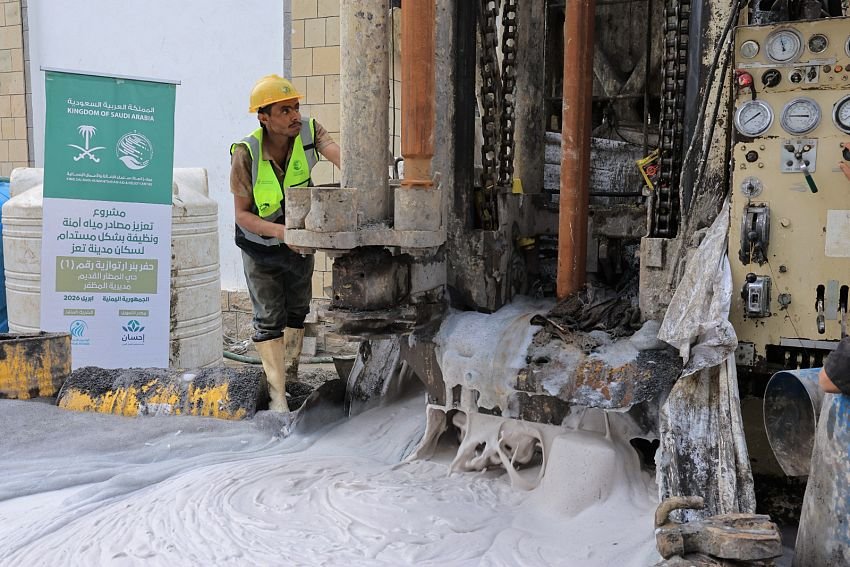
The recent inauguration of a water project by the King Salman Humanitarian Aid and Relief Center (KSrelief) in Taiz Governorate represents a pivotal moment in Yemen’s ongoing struggle for stability and humanitarian relief. This initiative not only addresses immediate water scarcity but also underscores the broader geopolitical implications of water security in a region plagued by conflict and humanitarian crises.
Yemen has been embroiled in a devastating civil war since 2014, leading to one of the world’s worst humanitarian crises. The conflict has severely disrupted essential services, including water supply, which is critical for both survival and social stability. Taiz, a city that has witnessed intense fighting, has been particularly affected, with its infrastructure in ruins and access to clean water severely limited. The ongoing humanitarian efforts, particularly those led by Saudi Arabia through KSrelief, are crucial not only for immediate relief but also for laying the groundwork for long-term recovery and stability in the region.
The inauguration of three new deep groundwater wells, each drilled to approximately 400 meters and equipped with solar-powered systems, marks a significant advancement in addressing Taiz’s water crisis. This initiative, executed by Human Access with KSrelief’s financial backing, aims to provide a sustainable source of safe drinking water for the city’s population. The project also includes the upgrade of existing wells, enhancing their efficiency through solar energy, which reduces reliance on conventional fuel sources. Furthermore, training local personnel in water management and maintenance ensures that these facilities will remain operational and effective in the long term.
The implications of this water project extend beyond mere access to drinking water. Politically, it represents a strategic move by Saudi Arabia to bolster its influence in Yemen amidst a complex web of alliances and rivalries. By providing essential services, Saudi Arabia not only addresses humanitarian needs but also positions itself as a key player in Yemen’s reconstruction efforts. Economically, improved water access can stimulate local economies, enhance agricultural productivity, and reduce the burden of water-related health issues. Security-wise, ensuring a reliable water supply can mitigate tensions among local populations, fostering a sense of stability and community resilience in a region fraught with conflict.
From a strategic perspective, the expansion of water access in Taiz is a critical component of Saudi Arabia’s broader geopolitical strategy in Yemen. As the conflict continues, control over resources like water becomes increasingly vital. The project not only serves immediate humanitarian needs but also acts as a tool for influence, potentially swaying local populations towards Saudi-backed governance structures. However, the risks are substantial; the ongoing conflict poses threats to the sustainability of such projects, and any resurgence of violence could undermine these efforts. Moreover, the reliance on solar technology, while innovative, requires ongoing maintenance and security to ensure its effectiveness in a volatile environment.
Looking ahead, the success of this water initiative will depend on several factors. Continued support from KSrelief and other international partners will be essential to maintain and expand these efforts. Additionally, local governance structures must be strengthened to ensure that the benefits of improved water access are equitably distributed and that communities are empowered to manage their resources effectively. If successful, this project could serve as a model for similar initiatives across Yemen, potentially leading to a broader stabilization of the region. However, the specter of renewed conflict remains a significant threat, and without a comprehensive peace agreement, the long-term viability of such humanitarian projects is uncertain.
The drilling of new wells in Taiz is more than just a humanitarian effort; it is a strategic maneuver in the complex geopolitical landscape of Yemen. By addressing the critical issue of water scarcity, KSrelief is not only providing immediate relief but also laying the groundwork for a more stable and secure future in a region that desperately needs it. The success of this initiative could have far-reaching implications, influencing both local dynamics and the broader geopolitical landscape in the Middle East.
About the Author