
Yemen and IMF Reach Staff-Level Agreement in Amman on 18-Month Monitored Program
 Yemen Herald News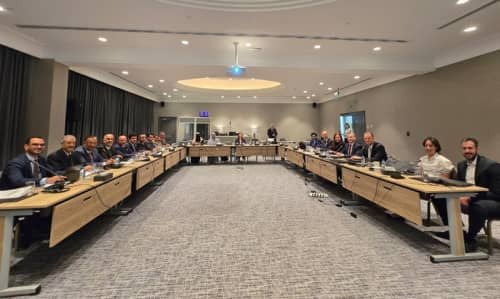
The Yemeni government has concluded a round of talks with a delegation from the International Monetary Fund in Amman, Jordan, aimed at establishing a monitoring programme for the country’s economic policies. The discussions, held from July 5 to 16, brought together senior Yemeni officials and IMF staff to work out the framework for closer engagement between the government and the fund.
On the Yemeni side, the meetings were attended by Ahmed Ghaleb, the governor of the Central Bank of Yemen, alongside the minister of finance and representatives from various government bodies. The IMF team was led by Esther Perez-Ruiz, the fund’s mission chief for Yemen, whose staff worked with their counterparts on an economic and financial policy memorandum and a technical memorandum of understanding that together set out the programme’s terms.
The two sides reached a staff-level agreement, which remains subject to approval by IMF management, on the policies that would underpin a proposed Staff-Monitored Programme, an arrangement expected to run for about eighteen months. Unlike a conventional IMF loan, a staff-monitored programme provides no financing; instead it allows the fund to track a government’s reforms and, if they are implemented credibly, to help build the track record needed to unlock international support later.
The engagement builds on earlier contacts between Yemen and the fund, which has continued to monitor the economy through periodic staff visits and its regular Article IV consultations even as a full lending programme remained out of reach during the war. A monitored programme is often used as a bridge in such cases, giving a government a structured path back toward the kind of relationship that could eventually support concessional financing.
The programme’s priorities, as described by both sides, centre on restoring macroeconomic stability. They include tighter fiscal and monetary discipline, stronger revenue collection, more effective use of scarce public resources, the rebuilding of foreign-currency reserves and reforms to the financial sector and the electricity system. Improving governance and transparency featured prominently, reflecting donors’ insistence that aid and investment be matched by credible institutions. The fund has framed the effort as a way to consolidate recent stabilisation gains rather than to impose sudden austerity on a fragile economy.
The talks come against a backdrop of severe economic distress. The IMF projects that Yemen’s economy will contract by 1.5 percent in 2026, a fifth consecutive year of shrinking output, weighed down by worsening terms of trade, energy shortages and weak demand. Years of civil war have shattered Yemen’s public finances, split its monetary system between rival authorities and sent the currency into repeated bouts of depreciation, driving up the cost of food and fuel for a population already stretched thin. The government acknowledged the exceptional circumstances it faces while stressing its commitment to a practical reform agenda aligned with national priorities.
A central challenge is the fracturing of Yemen’s financial system. The internationally recognised government and the Houthi authorities operate competing central-bank branches and have at times issued rival banknotes and blocked each other’s currency, complicating any nationwide stabilisation effort. Strengthening the credibility of the Aden-based central bank is therefore central to what the IMF programme seeks to achieve.
External backing has been a lifeline for the recognised government’s finances. Gulf states, Saudi Arabia and the United Arab Emirates among them, have at various points provided deposits and budget support to shore up the central bank and the value of the rial, and the discipline a monitored programme imposes is partly intended to reassure such donors that their money is being managed responsibly. Sustained reform could also strengthen Yemen’s case for debt relief and for renewed development lending from institutions like the World Bank.
The economic picture is inseparable from Yemen’s humanitarian emergency. The United Nations estimates that around 19.5 million people needed assistance in 2025, with widespread poverty, displacement and recurring outbreaks of disease compounding the strain. Macroeconomic stabilisation, officials argue, is a prerequisite for easing that suffering, since a functioning economy is what ultimately pays salaries, sustains services and reduces dependence on emergency aid.
Yemen’s location lends the effort a wider significance. The country sits beside the Red Sea and the Bab al-Mandab Strait, one of the world’s most important trade arteries, and instability there has repeatedly rippled through global shipping. A more stable Yemeni economy and better governance, its partners argue, could help secure that corridor and contribute to calm in a volatile region.
IMF technical support may also help Yemen build a more structured and transparent financial framework over time. Clearer rules and stronger institutions could gradually improve investor confidence and lay the groundwork for the foreign investment that any durable recovery will require.
The success of the arrangement will hinge on implementation. Reform programmes in conflict-affected states frequently falter when political turmoil or renewed fighting overwhelms the capacity to follow through, and Yemen’s divided institutions add a further layer of difficulty. The IMF’s own assessments have repeatedly described the country’s economic and humanitarian situation as dire.
Still, the conclusion of the Amman talks marks a step in a longer process. By agreeing on the shape of a monitored programme, Yemen has signalled a willingness to submit its economic management to outside scrutiny in exchange for the credibility that scrutiny can confer. Whether that translates into tangible improvement will depend on decisions taken in Aden and Sana’a, and on whether the fragile calm that reform requires can hold.
About the Author




