Yemen’s Envoy in Damascus Raises Unauthorized Tehran Flights and Red Sea Threats With Syrian Official
 Yemen Herald News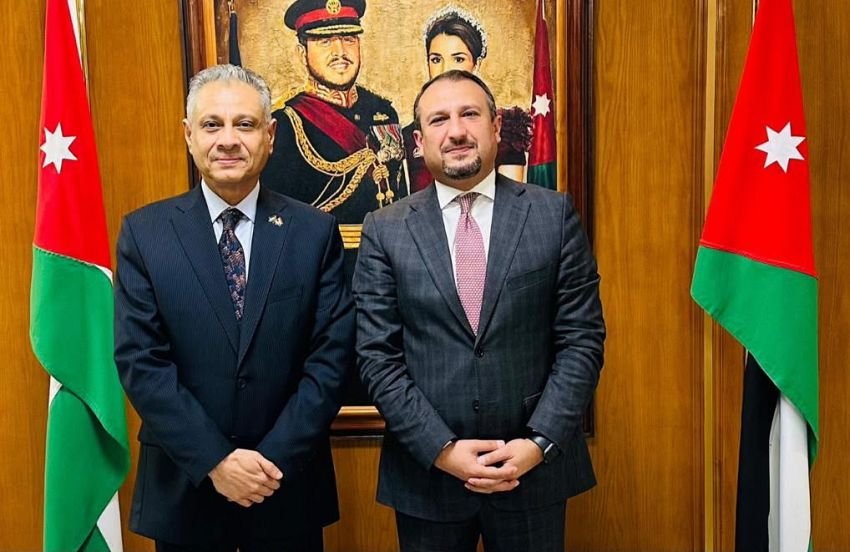
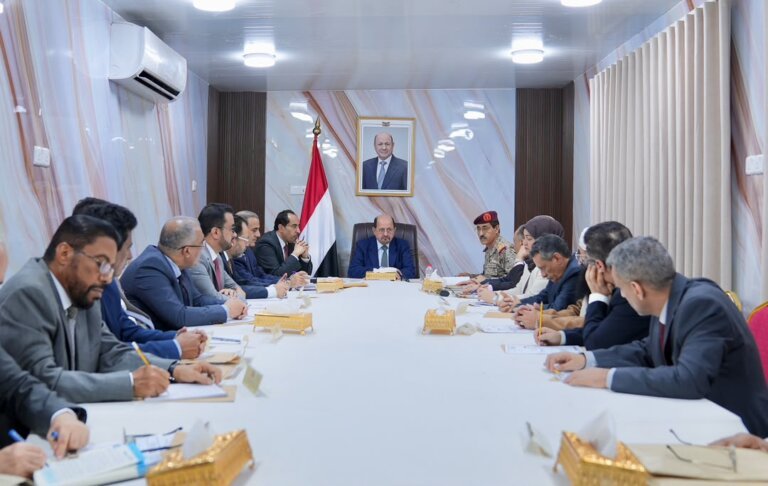
Yemen’s chargé d’affaires in Damascus, Mohammed Baakar, held talks on Wednesday with Dr. Mohammed al-Ahmad, the adviser for Arab affairs at the Syrian Ministry of Foreign Affairs and Expatriates, at the ministry’s headquarters in the Syrian capital. The two officials discussed the latest developments in Yemen alongside regional issues of mutual concern, according to the official news agencies of both countries, Yemen’s Saba and Syria’s SANA. The meeting came at a moment of sharply rising regional tension, days after Yemen’s Houthi movement declared a maritime embargo against Saudi Arabia and as the confrontation between the United States and Iran continued to escalate.
According to Saba’s account of the meeting, Baakar set out what the internationally recognized Yemeni government describes as continuing violations of the country’s sovereignty. He singled out the operation of flights between Tehran and Sana’a without prior authorization from the legitimate Yemeni authorities, a practice the government says undermines its control over national airspace. Aden has recently taken the dispute to the international stage, calling on the International Civil Aviation Organization to uphold international aviation law over what it characterizes as an airspace violation. Sana’a and its international airport have been under Houthi control since the group seized the capital in late 2014, and the question of who may lawfully authorize flights into the city has become another front in the wider contest over Yemen’s legitimate representation.
Baakar also highlighted what he described as the persistent threat the Houthi militias pose to freedom of navigation in the Red Sea. His remarks landed at an especially sensitive moment. On 20 July the Houthis declared what they called a comprehensive maritime blockade of Saudi Arabia, announcing that vessels serving Saudi ports would no longer be allowed safe passage through the Bab al-Mandab Strait, and two days later the group claimed missile and drone attacks on two Saudi oil tankers in the southern Red Sea. Syria has publicly condemned the Houthi statements directed at Saudi Arabia, joining a long list of Arab and international governments that have denounced the escalation.
The chargé d’affaires went on to review the measures the Yemeni government says it is taking to safeguard the country’s sovereignty and natural resources, ease the suffering of its citizens, improve public services and work toward economic stability. Those efforts face formidable obstacles: the Yemeni rial has lost much of its value over years of conflict, public salaries are paid irregularly in many areas, and the division of the country between the government and the Houthi authorities has fractured institutions from the central bank to the customs service.
For his part, al-Ahmad reaffirmed Syria’s longstanding support for Yemen’s sovereignty, stability and territorial integrity. He called for greater regional and international cooperation in support of the legitimate Yemeni authorities and of their efforts to meet the Yemeni people’s aspirations for security, stability and development. SANA reported that the two sides also reviewed bilateral relations between the two countries, explored ways of strengthening cooperation, and discussed the role of Arab cooperation in promoting security and stability across the region amid the latest escalations.
The meeting is the latest sign of a steadily warming relationship between the two governments. Yemen reopened its embassy in Damascus in April 2025, months after the change of government in Syria at the end of 2024, and Baakar has since represented Yemeni interests there as chargé d’affaires. Under the previous Syrian administration, Damascus maintained close ties with Iran, which United Nations experts and Western governments have long identified as the principal foreign backer of the Houthis, an allegation Tehran denies. The new Syrian leadership has instead moved to rebuild relations with Arab governments, including the Gulf states that support Yemen’s internationally recognized government, and regular diplomatic contacts between Damascus and Aden have followed.
The diplomatic activity unfolds against a humanitarian emergency of staggering scale. According to the United Nations 2026 Humanitarian Needs and Response Plan, more than 22 million people in Yemen require humanitarian assistance and protection this year, including 5.2 million internally displaced people. Some 18.3 million Yemenis face acute food insecurity, and more than 2.2 million children under the age of five are acutely malnourished. Aid agencies launched an appeal for 2.16 billion dollars in March to reach 12 million of the most vulnerable people, but funding has lagged badly, and humanitarian officials warn that shortfalls are already forcing cuts to life-saving programmes.
Yemen’s war has deep roots. The Houthis seized Sana’a in late 2014, prompting a Saudi-led coalition to intervene in March 2015 in support of the internationally recognized government. Although front lines have remained largely static since a UN-brokered truce in 2022, no political settlement has followed, and the country remains divided between rival administrations. The Red Sea escalation of recent weeks has renewed fears that the stalemate could tip back into open conflict, with consequences that would reach far beyond Yemen’s borders given the strategic importance of the shipping lanes off its coast.
Set against that backdrop, a meeting between a chargé d’affaires and a ministry adviser might appear modest, but it forms part of the diplomatic work through which Yemen’s government is consolidating Arab support for its positions on sovereignty, airspace and maritime security. With the region’s crises increasingly intertwined, further exchanges between Damascus and Aden are likely as both sides seek stability in a turbulent moment.
About the Author