The recent discussions between Yemen’s financial leaders and the International Monetary Fund (IMF) signal a pivotal moment for the war-torn nation, as it seeks to stabilize its economy amidst ongoing regional turmoil. This engagement is not merely procedural; it represents a desperate bid for financial recovery and a potential lifeline for millions of Yemenis facing dire humanitarian conditions.
Yemen has been embroiled in a devastating civil war since 2014, which has led to one of the world’s worst humanitarian crises. The conflict has decimated the economy, leaving the country reliant on international aid and severely limiting its ability to engage in meaningful economic reforms. The IMF’s Article IV consultations, which focus on assessing a country’s economic health and providing policy advice, have been absent for several years due to the instability and lack of governance in Yemen. The resumption of these consultations is a significant step, indicating a potential shift towards rebuilding the country’s economic framework and addressing the systemic issues that have plagued it for years.
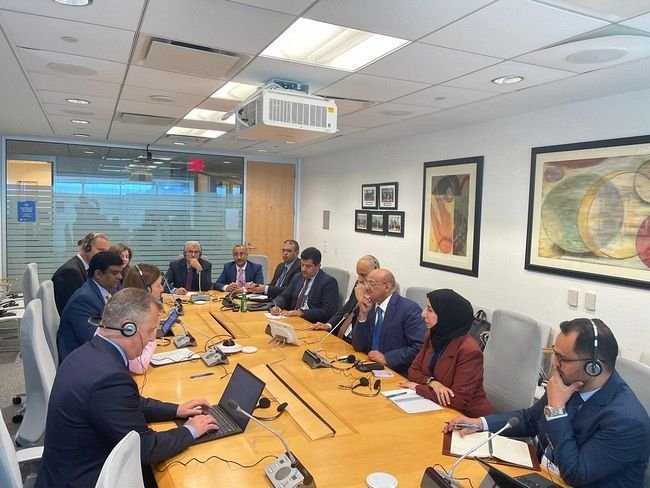
During recent meetings held in Washington, the Governor of the Central Bank of Yemen, Ahmed Ghaleb, along with key ministers, engaged with Esther Perez, the head of the IMF mission to Yemen. The discussions revolved around the IMF’s decision to resume Article IV consultations, which will involve a comprehensive review of Yemen’s economic policies and conditions. This engagement is crucial, as it lays the groundwork for Yemen to enter an IMF monitoring program aimed at addressing financial imbalances and implementing a robust economic reform agenda. The urgency of these discussions is underscored by the current geopolitical climate in the Middle East, where rising costs of insurance, shipping, and energy are exacerbating Yemen’s economic woes.
The implications of these developments are profound. Politically, the resumption of talks with the IMF could bolster the legitimacy of the Yemeni government, which has struggled to maintain authority amidst the chaos of war. Economically, the potential for IMF support could provide Yemen with access to critical financing tools necessary for recovery. However, the challenges are immense. The ongoing conflict continues to strain public finances, and the rising cost of basic commodities threatens to push more Yemenis into poverty. The government’s ability to balance economic reforms with immediate humanitarian needs will be tested, as any misstep could lead to further instability and unrest.
From a strategic perspective, Yemen’s engagement with the IMF represents a critical juncture in the broader geopolitical landscape of the Middle East. As regional powers vie for influence, the economic stability of Yemen could shift the balance of power in the region. The success of Yemen’s economic reforms could serve as a model for other conflict-affected nations, potentially attracting foreign investment and support. Conversely, failure to implement effective reforms could lead to increased instability, further complicating the already volatile situation in the region. The risks are high, and the stakes are even higher, as Yemen navigates this precarious path towards recovery.
Looking ahead, several scenarios could unfold. If the Yemeni government successfully implements the IMF’s recommendations and stabilizes the economy, it could pave the way for a gradual recovery and improved living conditions for its citizens. This success could also enhance the government’s credibility and strengthen its position in ongoing peace negotiations. However, if the government falters in its reform efforts or if the conflict escalates, Yemen could face even greater economic collapse, leading to increased humanitarian crises and potential regional spillover effects. The international community’s role will be crucial in either scenario, as continued support and pressure will be necessary to ensure that Yemen remains on a path towards recovery.
In conclusion, Yemen’s discussions with the IMF mark a significant step towards addressing the country’s economic challenges. The potential for recovery hinges on the government’s ability to implement effective reforms while balancing the urgent humanitarian needs of its population. As the geopolitical landscape continues to evolve, the implications of Yemen’s economic stability will resonate far beyond its borders, influencing regional dynamics and the broader international community’s approach to conflict resolution and humanitarian assistance. The world must pay close attention to Yemen’s journey, as its fate could serve as a bellwether for the future of other nations grappling with similar crises.
About the Author