Masam’s Demining Work Advances Yemen’s Path to Recovery
 Yemen Herald News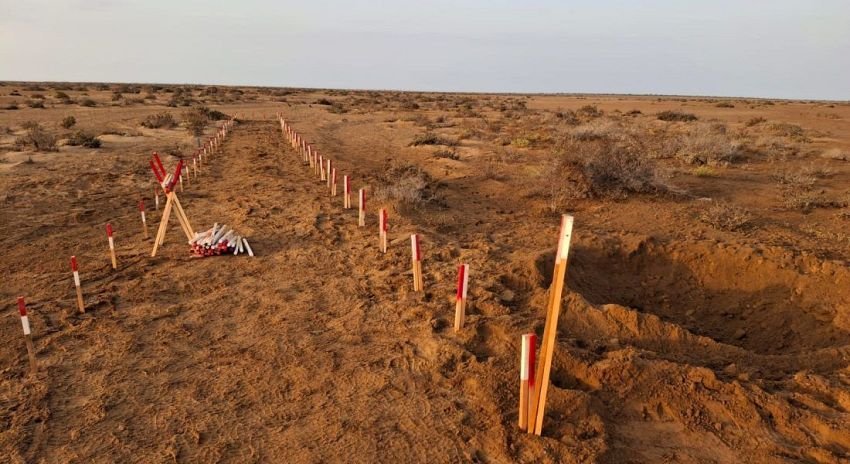
Yemen’s Masam demining project remains central to efforts to restore civilian safety and to create conditions conducive to recovery, as the country contends with one of the heaviest burdens of landmine and explosive contamination in the world. The clearance of mines and unexploded ordnance is widely regarded as essential to protecting lives and to enabling the reconstruction and return that a measure of stability would allow.
Yemen has been embroiled in conflict since 2015, a war that has produced a humanitarian crisis of immense proportions. Among its many legacies is the scattering of landmines and explosive remnants of war across the country, posing a persistent threat to civilian life and hindering humanitarian and recovery efforts long after particular battles have ended.
The Masam project, launched in June 2018, was established to address this dire situation by systematically clearing mines and unexploded ordnance. Funded by Saudi Arabia and implemented by the King Salman Humanitarian Aid and Relief Centre, it has become one of the most prominent demining initiatives in the country, working across multiple governorates.
The scale of contamination in Yemen is such that the country is considered among the most heavily mined in the world. Vast quantities of mines and explosive remnants of war have been laid or left behind over the course of the conflict, and clearing them is a task measured in years, requiring sustained effort and resources.
The threat posed by mines and unexploded ordnance falls heavily on civilians. These devices strike indiscriminately, and their victims have included large numbers of ordinary people, among them children, women and the elderly, who encounter them while going about their daily lives, farming, travelling or returning to their homes.
The clearance of contaminated areas is a prerequisite for many aspects of recovery. Land that is contaminated cannot be safely farmed, roads cannot be safely travelled and areas cannot be safely resettled, meaning that demining is essential to enabling the return of displaced families, the resumption of agriculture and the rebuilding of communities.
Demining is exacting and dangerous work, requiring specialised training, equipment and meticulous care. The teams that carry it out operate in hazardous conditions, methodically locating and neutralising devices while safeguarding their own lives, and their efforts are essential to reducing the toll that contamination continues to exact on the population.
The systematic approach of the Masam project reflects the methodical nature of demining. Clearing contamination requires the careful survey of affected areas, the identification and neutralisation of devices and the verification that land has been made safe, a painstaking process that must be sustained over time to address the scale of the challenge.
The human significance of demining extends beyond the removal of devices to the restoration of safety and the enabling of recovery. Each area cleared allows communities to reclaim their land, roads and homes, and each device removed represents a potential tragedy averted, giving the work a value measured ultimately in lives protected and communities restored.
The role of Saudi Arabia in funding the project reflects the involvement of the kingdom in humanitarian efforts in Yemen. Its support for demining, through the King Salman Humanitarian Aid and Relief Centre, has enabled the sustained clearance of mines and explosive remnants of war, contributing to the protection of civilians.
The impact of the project has been felt across the governorates in which it operates, from frontline areas to districts where displaced families have begun to return. Its clearance of contaminated land has contributed to the safety of communities and to the conditions that enable recovery, addressing a threat that pervades much of the country.
Awareness-raising and risk education complement the physical work of clearance, particularly for populations living amid the threat of mines. Educating communities about the dangers and how to avoid them can help reduce casualties in areas that have not yet been cleared, forming part of a comprehensive approach to protecting civilians from explosive hazards.
The scale of the contamination means that demining will remain a critical task in Yemen for years to come. Even as teams clear large quantities of devices, vast amounts are believed to remain, and events such as flooding can redistribute the danger, underscoring the enduring nature of the challenge and the need for sustained effort.
The continuation of demining depends on sustained funding and commitment. The clearance of Yemen’s contamination is a long-term undertaking, and maintaining the effort requires reliable resources and the continued engagement of those who fund and support it, making the sustainability of such projects important to the protection of civilians.
The significance of demining to Yemen’s future is difficult to overstate. Clearing the country of mines and explosive remnants of war is essential not only to protecting lives but to enabling the recovery, reconstruction and return that a more stable future would require, making it a foundational element of the broader effort to rebuild.
For now, the work of the Masam project stands as a vital contribution to the protection of civilians and to the prospects for recovery in Yemen. As the country contends with the explosive legacy of its conflict, the sustained clearance of mines and unexploded ordnance remains an essential and enduring task, central to the safety and future of its people.
About the Author