Trump Says Iran Talks Are Under Way as Tehran Rejects a US 15-Point Plan Sent via Pakistan
 Yemen Herald News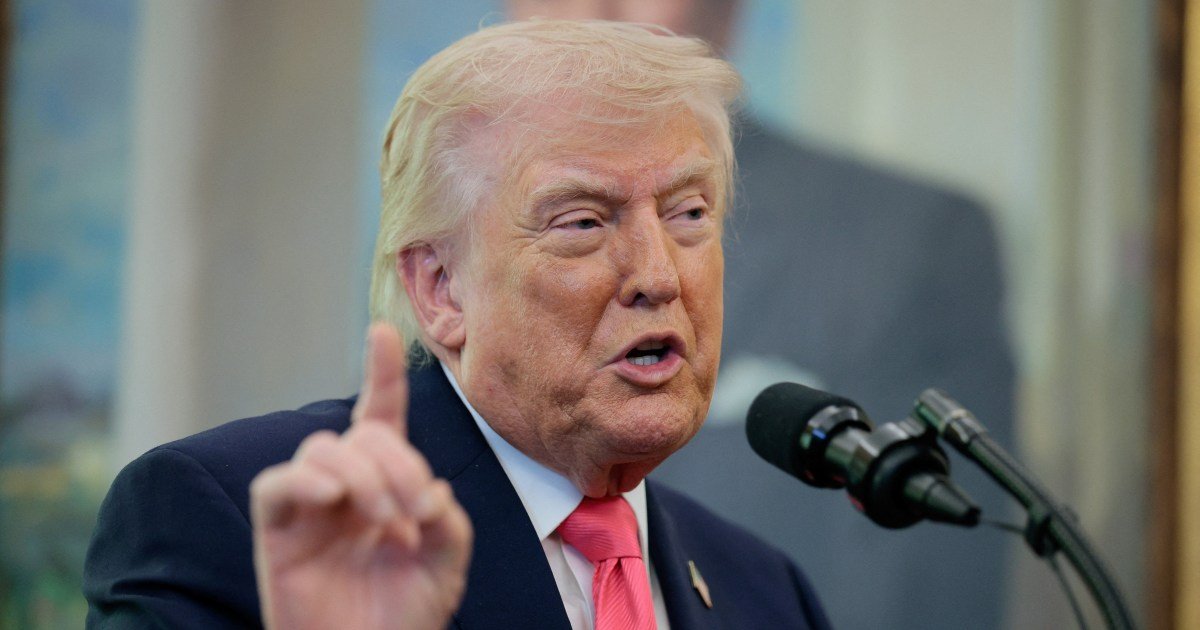
President Donald Trump insisted in late March 2026 that the United States was in negotiations with Iran and was dealing with the right people in Tehran, even as Iranian officials publicly denied that any talks were taking place. Speaking at the White House, Trump said Iran wanted a deal and pointed to the country’s oil and gas interests as the reason it would eventually come to terms.
Behind the public exchange sat a concrete document. Reporting on 24 and 25 March established that the United States had transmitted a fifteen-point plan to Iran setting out terms for ending the war, and that the plan had been delivered through Pakistani intermediaries in Islamabad rather than through any direct channel between Washington and Tehran.
The terms were far-reaching. According to accounts of the proposal, it required the dismantling of Iran’s existing nuclear capabilities and a commitment to abandon any effort to develop nuclear weapons, with the facilities at Natanz, Isfahan and Fordow to be decommissioned. It asked Iran to guarantee that the Strait of Hormuz would remain open, and to limit its ballistic missile programme to what could be justified as self-defence.
One clause bore directly on Yemen. The plan reportedly required Iran to abandon what the United States describes as its network of proxy armed groups across the region and to stop financing and arming them. That network is generally understood in Washington to include Hezbollah in Lebanon, armed factions in Iraq and Syria, and the Houthi movement in Yemen. Any Iranian acceptance of such a clause would carry consequences for the balance of forces inside Yemen that no Yemeni party would have had a hand in negotiating.
In exchange, the proposal offered the lifting of sanctions on Iran and American assistance in developing an Iranian civilian nuclear programme, including electricity generation at the Bushehr plant. That offer is notable given that strikes had been reported near the Bushehr facility during the same period, and it indicates that the American position distinguished between civilian power generation and enrichment capability.
Iran rejected the proposal. Officials in Tehran had denied that negotiations were under way even as the plan was being transmitted, a position that is difficult to reconcile with the receipt of a written document but which is consistent with a government unwilling to be seen bargaining while under attack. Reporting at the time indicated that Iran had responded with counter-demands of its own.
The military situation had not paused for the diplomacy. Iranian attacks on Israel continued through the period, and strikes were reported near Iran’s Bushehr nuclear site, the country’s only operating power reactor. Negotiating terms for dismantling nuclear infrastructure while that infrastructure is being struck creates an obvious difficulty: each side has an incentive to establish facts on the ground before any agreement fixes them.
The scope of the American terms also helps explain the Iranian refusal. Decommissioning Natanz, Isfahan and Fordow, capping the missile programme and severing regional partnerships would amount to dismantling the three pillars on which Iran’s security doctrine has rested since the 1980s. Governments rarely accept terms of that scale except after decisive military defeat, and neither side was claiming that in March 2026.
The gap between the two public positions was itself the story. Trump’s characterisation of talks in progress and Tehran’s denial that any existed could both be technically defensible: indirect transmission of terms through a third country is not the same as negotiation in the sense either government uses the word publicly. Mediated diplomacy of this kind routinely proceeds while both sides deny that it is happening.
Pakistan’s role as the channel was significant. Islamabad maintains relations with both Washington and Tehran, shares a long land border with Iran, and has periodically acted as an intermediary in regional disputes. Its selection over the more customary mediators for United States-Iran contacts, Oman and Switzerland, suggested either that those channels were unavailable or that Pakistan offered something specific in terms of access.
The Strait of Hormuz provision was the most immediately consequential for the global economy. Its de facto closure had already prompted an International Energy Agency decision on 11 March to release 400 million barrels from emergency stocks, and a joint statement by twenty governments on 19 March declaring readiness to help secure passage. Reopening the strait was therefore not merely a bargaining chip but the single measure that would most quickly reduce pressure on energy markets.
For Yemen, the negotiations mattered on two levels. The direct one is the proxy clause, which would affect Iranian support for the Houthi authorities in Sanaa. The Yemeni government has for years accused Iran of supplying weapons and technical assistance to the group, a charge Tehran denies while acknowledging political ties. The indirect one is the shipping corridor: Yemen imports the overwhelming majority of its food, fuel and medicine by sea, and any settlement that restored normal traffic through the region’s chokepoints would ease costs in Yemeni markets.
The proposal did not produce an agreement in March. Talks continued in various forms through the spring, with Iran advancing a fourteen-point counter-proposal in May, and Trump saying later that an agreement had been largely negotiated and that the Strait of Hormuz would be opened. Deadlines set for the reopening were extended more than once.
About the Author